
Reggae · 2012年2月12日
5. Ras Cultura特辑:Bobo-Ashanti的混合神学。
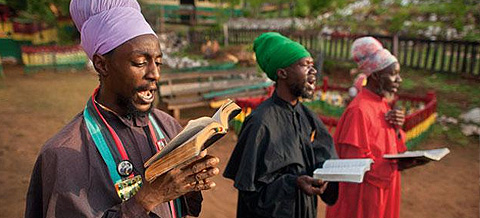
Bobo Ashanti 是一个出现于 1950 年代的 Rastafari 会众。 Its founder, "Prince" Edward Charles Emmanuel, the main figure in the history of this community, is a rather extreme example of the charismatic leadership of Elders within the hierarchical system of relations among rastas. "Elder", a word from Jamaican Patois, is certainly a phonetic-orthographic corruption of the English OLD and OLDEN, meaning old, ancient and also familiar, known.
The designation of these Rastafari leaders, therefore, is connected to the specific attributes the community expects from a leader whose "office" is lifelong. Maturity as a sign of knowledge, accumulated experience and broad knowledge of the psychological profile, conscious or not, of the people he must guide. Edward Emmanuel, called "Prince" by his followers, at a certain moment in his religious leadership, adhered to the mystical idea of his followers that he, Emmanuel, was in fact an earthly and human manifestation of one of the Persons of the Holy Trinity, Jesus himself returned to guide the people on the path of Salvation.
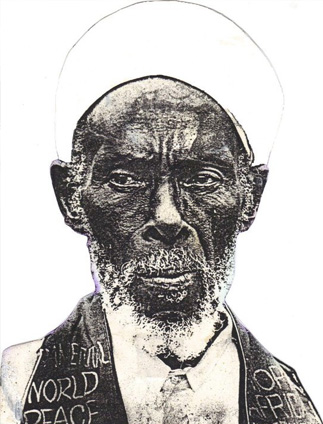 (Prince Edward Charles Emmanuel)
In the West of the 20th century, the Rastafari movement, even though sometimes supported by questionable theology, represented and still represents a powerful instrument for rescuing the cultural identity of Black peoples throughout the world. In culturally globalized societies, among blazers, jeans and T-shirts, the appeal of the Elder's Afro-Arab clothing is a bold manifestation of ethnic self-esteem and pride in one's own history.
The myth around Emmanuel began to form at an event that brought together several Rastafari congregations to discuss the movement's guidelines. The subject that most interested participants was the proposal of Repatriation, a yearning that had long been growing among Jamaicans: the return to Africa as the recovery of a natural destiny that slave activity had cruelly distorted. The Return was seen as a right of the descendants of slaves, a debt of whites to Blacks, a logical corrective act for the great European error of the past, a dream in Black consciousness. During the Convention, Emmanuel led a symbolic walk that decreed the end of forced exile and the beginning of the awaited Return.
His performance in the episode impressed the audience so much that a large part of it was taken by great respect for the Elder, whom they began to see as endowed with a divine aura around which an entire theological thesis was elaborated about the reincarnation of the Holy Trinity in earthly persons who represented the Father, the Son and the Holy Spirit, thus announcing an unprecedented type of material manifestation of the Unknowable Unity (God), which in the 20th century would have assumed conditions of human existence, as Christ Jesus himself had done.
This time, the Trinity was embodied in three individuals: besides Jesus-Emmanuel Edward, the Son, the Father was identified as Haile Sellasie, Emperor of Ethiopia, an African voice of international prominence; as for the Holy Spirit, he was recognized in political leader Marcus Garvey, twice a biblical figure because besides representing the Holy Spirit he was seen as the reincarnation of John the Baptist, the one who preceded and foresaw the coming of Christ.
(Prince Edward Charles Emmanuel)
In the West of the 20th century, the Rastafari movement, even though sometimes supported by questionable theology, represented and still represents a powerful instrument for rescuing the cultural identity of Black peoples throughout the world. In culturally globalized societies, among blazers, jeans and T-shirts, the appeal of the Elder's Afro-Arab clothing is a bold manifestation of ethnic self-esteem and pride in one's own history.
The myth around Emmanuel began to form at an event that brought together several Rastafari congregations to discuss the movement's guidelines. The subject that most interested participants was the proposal of Repatriation, a yearning that had long been growing among Jamaicans: the return to Africa as the recovery of a natural destiny that slave activity had cruelly distorted. The Return was seen as a right of the descendants of slaves, a debt of whites to Blacks, a logical corrective act for the great European error of the past, a dream in Black consciousness. During the Convention, Emmanuel led a symbolic walk that decreed the end of forced exile and the beginning of the awaited Return.
His performance in the episode impressed the audience so much that a large part of it was taken by great respect for the Elder, whom they began to see as endowed with a divine aura around which an entire theological thesis was elaborated about the reincarnation of the Holy Trinity in earthly persons who represented the Father, the Son and the Holy Spirit, thus announcing an unprecedented type of material manifestation of the Unknowable Unity (God), which in the 20th century would have assumed conditions of human existence, as Christ Jesus himself had done.
This time, the Trinity was embodied in three individuals: besides Jesus-Emmanuel Edward, the Son, the Father was identified as Haile Sellasie, Emperor of Ethiopia, an African voice of international prominence; as for the Holy Spirit, he was recognized in political leader Marcus Garvey, twice a biblical figure because besides representing the Holy Spirit he was seen as the reincarnation of John the Baptist, the one who preceded and foresaw the coming of Christ.
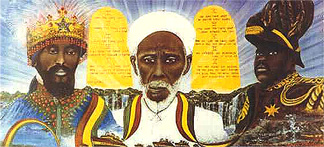 (The Father Haile Selassie, the son Edward Emmanuel and the holy spirit Marcus Garvey)
Evidently, the theology of the Bobo-Ashanti is an easy target for scholars' criticism. Haile Selassie was well versed in the themes of Christianity and knew numerous sacred texts beyond the canonical Bible. Even though deeply religious, he entirely rejected any association of his person with Jesus, the Christ. He refused worship; reminding people that he was only a man, he stated:
(The Father Haile Selassie, the son Edward Emmanuel and the holy spirit Marcus Garvey)
Evidently, the theology of the Bobo-Ashanti is an easy target for scholars' criticism. Haile Selassie was well versed in the themes of Christianity and knew numerous sacred texts beyond the canonical Bible. Even though deeply religious, he entirely rejected any association of his person with Jesus, the Christ. He refused worship; reminding people that he was only a man, he stated:
 man must not worship man"
- and placed himself as a humble servant of God. Marcus Garvey also refused to accept the exotic doctrine of Prince Emmanuel and even of other rastas, such as Elder Mr. Gad of the Twelve Tribes, who also saw Garvey as a prophet and drew analogies between Garvey and John the Baptist, Selassie and Jesus, a view therefore different from Emmanuel's. Gad, however, was cautious, always using metaphors and half-words. There are reports that Garvey came to regard the Rastafarians as crazy fanatics because of such ideas.
Nevertheless, the people easily accepted the hope that came from this "Trinity" (theologically doubtful), and Emmanuel fully assumed his role as Black Messiah, organizing his Church with severe moral rules, adopting strong signs of identity and grounding his discourse in passages from the Bible, with special emphasis on the regulation of behavior contained in the books of the Old Testament.
When he speaks of Repatriation, he frequently resorts to the episodes of Jewish captivity: in Babylon and in Egypt. Besides Christian Judaism, Islam also seems to exercise considerable influence on Emmanuel's system, and in this there is no conflict, since Muslim doctrine was also built with elements taken from Judaism and Christianity.
man must not worship man"
- and placed himself as a humble servant of God. Marcus Garvey also refused to accept the exotic doctrine of Prince Emmanuel and even of other rastas, such as Elder Mr. Gad of the Twelve Tribes, who also saw Garvey as a prophet and drew analogies between Garvey and John the Baptist, Selassie and Jesus, a view therefore different from Emmanuel's. Gad, however, was cautious, always using metaphors and half-words. There are reports that Garvey came to regard the Rastafarians as crazy fanatics because of such ideas.
Nevertheless, the people easily accepted the hope that came from this "Trinity" (theologically doubtful), and Emmanuel fully assumed his role as Black Messiah, organizing his Church with severe moral rules, adopting strong signs of identity and grounding his discourse in passages from the Bible, with special emphasis on the regulation of behavior contained in the books of the Old Testament.
When he speaks of Repatriation, he frequently resorts to the episodes of Jewish captivity: in Babylon and in Egypt. Besides Christian Judaism, Islam also seems to exercise considerable influence on Emmanuel's system, and in this there is no conflict, since Muslim doctrine was also built with elements taken from Judaism and Christianity.
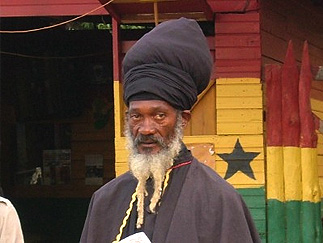 Cultural recovery seems to be one of the central concerns of the Congregation's ideology. Curiously, the originality of this culture was long lost among Afro-descendants in the Americas, who assimilated elements from the traditions of other peoples, generating a varied expression of the Bobo-Ashanti way of being. The Bobo of Jamaica are not absolutely the same as the Bobo of Trinidad-Tobago, for example, just as they are not the same as their Kumasi ancestors. Even in Africa, contact with Europeans, Arabs and Jews long ago introduced a whole body of imported and duly assimilated ideas that appear in the way of life, consumption patterns, social order and especially the religious sphere.
Today, the primitive religions of Africa have not perished, but occupy a peripheral place in relation to the "great" religions: Roman Catholic, Protestant and Orthodox Christianity, Judaism and Islam (in the north of the continent) and Hinduism (south). Among the Bobo, the Judeo-Christian inheritance is concentrated in doctrine, while in daily community life customs are adopted that refer to Islamic rules of behavior.
The mere sight of Ashanti priests immediately reveals the syncretic character of their beliefs and culture as a whole. The doctrine is markedly Jewish, the philosophy of community life is Christian, the social code for women and the clothing reveal Muslim influence, the dreads and use of ganja go back to Ancient India, and the three symbolic colors of Rastafarianism are Jamaica's tribute to Ethiopia.
The Bobo "Creed" is a clear illustration of this mixture of beliefs. God is called Jehovah, as in the Christian Old Testament and in the Jewish Scriptures. A compound word, Jehovah or Jeovah joins two words from archaic Hebrew: Jod and Ieva, meaning "Man and Woman" or "Adam and Eve", since Jod is the Lingam or phallic symbol, and Ieva is Ova, or Egg-hand, or also ark, in reference to the female sex. The "Jah" of Rastafarians is therefore the masculine face of the deity Jeovah, a name whose meaning, as explained above, was lost among the cultural mutations of the centuries that passed. Another peculiarity of the Bobo Creed is the reference to Haile Selassie, last Emperor of Ethiopia, as if he were God himself, "our GOD SELASSIE", whether as God-Father or as God-Son, the Christ - Messiah, Savior.
The Christian dogma of the Holy Trinity, which is not only Christian but, on the contrary, a universal dogma regarding the ontology (form of being) of God, present in all the religions of the world, gained an extremely anthropomorphic interpretation in the Bobo-Ashanti conception. For the Bobo, the heavenly Trinity manifests itself in the earthly dimension embodied in the figures of the King, the Prophet and the Priest. In the full 20th century the disciples of Prince Emmanuel expanded the experience of Christ Jesus' sacrifice in human condition. In this conception, the entire Trinity assumes human forms on Earth, and it is up to the believer to recognize God's presence among the community leaders. Thus Selassie, Emmanuel and Garvey became Personas of the one who is Three and at the same time One.
The ethnicity of Jesus, the Christ, is one of the most notable themes of Bobo doctrine. Their interpretations of the Bible call attention to the fact that the figure of Jesus is generally represented according to a European, Aryan aesthetic. A Christ with blue eyes and blond hair is inadmissible, and in this the rastas of the Ethiopian Congress are right, since Jews are Semites and therefore have darker exterior characteristics, with black or brown hair and eyes.
Cultural recovery seems to be one of the central concerns of the Congregation's ideology. Curiously, the originality of this culture was long lost among Afro-descendants in the Americas, who assimilated elements from the traditions of other peoples, generating a varied expression of the Bobo-Ashanti way of being. The Bobo of Jamaica are not absolutely the same as the Bobo of Trinidad-Tobago, for example, just as they are not the same as their Kumasi ancestors. Even in Africa, contact with Europeans, Arabs and Jews long ago introduced a whole body of imported and duly assimilated ideas that appear in the way of life, consumption patterns, social order and especially the religious sphere.
Today, the primitive religions of Africa have not perished, but occupy a peripheral place in relation to the "great" religions: Roman Catholic, Protestant and Orthodox Christianity, Judaism and Islam (in the north of the continent) and Hinduism (south). Among the Bobo, the Judeo-Christian inheritance is concentrated in doctrine, while in daily community life customs are adopted that refer to Islamic rules of behavior.
The mere sight of Ashanti priests immediately reveals the syncretic character of their beliefs and culture as a whole. The doctrine is markedly Jewish, the philosophy of community life is Christian, the social code for women and the clothing reveal Muslim influence, the dreads and use of ganja go back to Ancient India, and the three symbolic colors of Rastafarianism are Jamaica's tribute to Ethiopia.
The Bobo "Creed" is a clear illustration of this mixture of beliefs. God is called Jehovah, as in the Christian Old Testament and in the Jewish Scriptures. A compound word, Jehovah or Jeovah joins two words from archaic Hebrew: Jod and Ieva, meaning "Man and Woman" or "Adam and Eve", since Jod is the Lingam or phallic symbol, and Ieva is Ova, or Egg-hand, or also ark, in reference to the female sex. The "Jah" of Rastafarians is therefore the masculine face of the deity Jeovah, a name whose meaning, as explained above, was lost among the cultural mutations of the centuries that passed. Another peculiarity of the Bobo Creed is the reference to Haile Selassie, last Emperor of Ethiopia, as if he were God himself, "our GOD SELASSIE", whether as God-Father or as God-Son, the Christ - Messiah, Savior.
The Christian dogma of the Holy Trinity, which is not only Christian but, on the contrary, a universal dogma regarding the ontology (form of being) of God, present in all the religions of the world, gained an extremely anthropomorphic interpretation in the Bobo-Ashanti conception. For the Bobo, the heavenly Trinity manifests itself in the earthly dimension embodied in the figures of the King, the Prophet and the Priest. In the full 20th century the disciples of Prince Emmanuel expanded the experience of Christ Jesus' sacrifice in human condition. In this conception, the entire Trinity assumes human forms on Earth, and it is up to the believer to recognize God's presence among the community leaders. Thus Selassie, Emmanuel and Garvey became Personas of the one who is Three and at the same time One.
The ethnicity of Jesus, the Christ, is one of the most notable themes of Bobo doctrine. Their interpretations of the Bible call attention to the fact that the figure of Jesus is generally represented according to a European, Aryan aesthetic. A Christ with blue eyes and blond hair is inadmissible, and in this the rastas of the Ethiopian Congress are right, since Jews are Semites and therefore have darker exterior characteristics, with black or brown hair and eyes.
 February 7:
Ethiopian New Year, beginning of the year for the "Black World".
March 1:
On this day, in 1958, the Rastafari Congress was opened, a historic moment that marks the beginning of the formation of the Bobo Congregation or Ethiopia Africa Black International Congress - Church of Divine Salvation.
March 23:
Empress Day. Refers to the formation of the Women's Liberation and Freedom League, in 1980.
April 21:
Recalls Haile Selassie's visit to Jamaica in 1966.
May 25:
Africa Liberation Day and the Founding of the Movement for African Unity, in Addis Ababa (capital of Ethiopia), in 1963.
July 23:
Commemorates the birth of Emperor Haile Selassie, in 1892 - Ejarsa, Goro-Province of Harar, Ethiopia.
August 1:
Emancipation Day - abolition of slavery in the Caribbean.
August 17:
Birth of Marcus Garvey, in 1887 - St Anns Bay (Baía de Santana), Jamaica.
November 2:
Coronation of Haile Selassie and Empress Menene, in 1930 - Addis Ababa, Ethiopia.
January 7:
Birthday of the Black Christ, Prince Emmanuel.
February 7:
Ethiopian New Year, beginning of the year for the "Black World".
March 1:
On this day, in 1958, the Rastafari Congress was opened, a historic moment that marks the beginning of the formation of the Bobo Congregation or Ethiopia Africa Black International Congress - Church of Divine Salvation.
March 23:
Empress Day. Refers to the formation of the Women's Liberation and Freedom League, in 1980.
April 21:
Recalls Haile Selassie's visit to Jamaica in 1966.
May 25:
Africa Liberation Day and the Founding of the Movement for African Unity, in Addis Ababa (capital of Ethiopia), in 1963.
July 23:
Commemorates the birth of Emperor Haile Selassie, in 1892 - Ejarsa, Goro-Province of Harar, Ethiopia.
August 1:
Emancipation Day - abolition of slavery in the Caribbean.
August 17:
Birth of Marcus Garvey, in 1887 - St Anns Bay (Baía de Santana), Jamaica.
November 2:
Coronation of Haile Selassie and Empress Menene, in 1930 - Addis Ababa, Ethiopia.
January 7:
Birthday of the Black Christ, Prince Emmanuel.
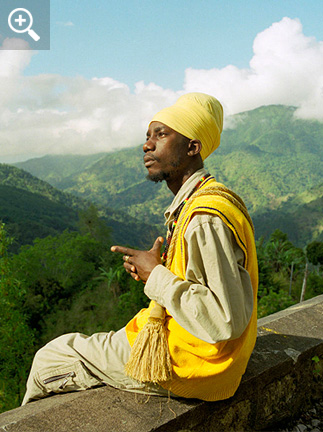 (Singer Sizzla)
In Trinidad, an island country very close to Jamaica, the Ashanti Community, which arrived in the region recently (SANKAR-ØYAN, 2003), is concentrated on Second Street, Main Road, on a hill called Tanapuna. There they organized themselves in a way of life in which all things revolve around the cult of the Black Christ, the affirmation of Black supremacy and the ideal of repatriation.
Settled on the island for a short time, the Ashanti in Trinidad number about 30 people led by His Majesty Father Shanti Tafari Edward, considered a true manifestation (or avatar) of Prince Emmanuel, founder of the Congregation in Jamaica. The social organization follows rules that are rigidly observed. Men and women live separately. Women inhabit the top of the hill. Just as all men refer to one another as sir, prince, king, women are called princesses, queens, empresses and, as such, are treated accordingly.
They have nothing to do in service of men, who take care of their own food and clothing. They occupy themselves only with their personal needs. The community day begins at 5:30 a.m. when a reveille sounds, calling the brothers to the reading of Psalms to the sound of drums. Only after this religious ritual does the daily routine begin. Cooking is a very important occupation. The community survives from the street sale of peanuts. Preparing the peanuts is a priority; after all, it is the product that guarantees the livelihood of the Shantis of Trinidad. While some prepare the delicacy, others pack the ready batches to be distributed to vendors who travel through the city.
Everyone commits to this task, including the community leader, Father Edward, obeying the principle of equality among all brothers. At noon, it is time for the second reading of Psalms, which precedes lunch. The same practice repeats at 6 in the evening, the hour of night Psalms and dinner. Health is handled by a "specialist", a "medicine man", Father Obadiah. There are tailors to make clothes and shoemakers who make sandals and other footwear. A touch of contemporary Westernness is a television, admitted only because it serves the community as a vehicle of information about events of interest on the island and in the world.
(Singer Sizzla)
In Trinidad, an island country very close to Jamaica, the Ashanti Community, which arrived in the region recently (SANKAR-ØYAN, 2003), is concentrated on Second Street, Main Road, on a hill called Tanapuna. There they organized themselves in a way of life in which all things revolve around the cult of the Black Christ, the affirmation of Black supremacy and the ideal of repatriation.
Settled on the island for a short time, the Ashanti in Trinidad number about 30 people led by His Majesty Father Shanti Tafari Edward, considered a true manifestation (or avatar) of Prince Emmanuel, founder of the Congregation in Jamaica. The social organization follows rules that are rigidly observed. Men and women live separately. Women inhabit the top of the hill. Just as all men refer to one another as sir, prince, king, women are called princesses, queens, empresses and, as such, are treated accordingly.
They have nothing to do in service of men, who take care of their own food and clothing. They occupy themselves only with their personal needs. The community day begins at 5:30 a.m. when a reveille sounds, calling the brothers to the reading of Psalms to the sound of drums. Only after this religious ritual does the daily routine begin. Cooking is a very important occupation. The community survives from the street sale of peanuts. Preparing the peanuts is a priority; after all, it is the product that guarantees the livelihood of the Shantis of Trinidad. While some prepare the delicacy, others pack the ready batches to be distributed to vendors who travel through the city.
Everyone commits to this task, including the community leader, Father Edward, obeying the principle of equality among all brothers. At noon, it is time for the second reading of Psalms, which precedes lunch. The same practice repeats at 6 in the evening, the hour of night Psalms and dinner. Health is handled by a "specialist", a "medicine man", Father Obadiah. There are tailors to make clothes and shoemakers who make sandals and other footwear. A touch of contemporary Westernness is a television, admitted only because it serves the community as a vehicle of information about events of interest on the island and in the world.
Etiópia Africa Black International Congress
(Ethiopian-African Black International Congress)
in BOBO-ASHANTI PORTUGUÊS
REDINGTON, Norman Hugh.
A sketch of rastafari history.
In BIGUP-RADIO.COM
accessed in September 2004.
SANKAR-ØYAN, Regina.
Impressions from a Congress.
In TRINIDAD-TOBAGO.NET
accessed in October 2004
Bobo Ashanti
WIKIPEDIA ONLINE
ZUELA, Sister.
Os Bobo-Ashanti
In RASTAFARI-REGGAE


(Prince Edward Charles Emmanuel)
(The Father Haile Selassie, the son Edward Emmanuel and the holy spirit Marcus Garvey)
man must not worship man"
- and placed himself as a humble servant of God. Marcus Garvey also refused to accept the exotic doctrine of Prince Emmanuel and even of other rastas, such as Elder Mr. Gad of the Twelve Tribes, who also saw Garvey as a prophet and drew analogies between Garvey and John the Baptist, Selassie and Jesus, a view therefore different from Emmanuel's. Gad, however, was cautious, always using metaphors and half-words. There are reports that Garvey came to regard the Rastafarians as crazy fanatics because of such ideas.
Nevertheless, the people easily accepted the hope that came from this "Trinity" (theologically doubtful), and Emmanuel fully assumed his role as Black Messiah, organizing his Church with severe moral rules, adopting strong signs of identity and grounding his discourse in passages from the Bible, with special emphasis on the regulation of behavior contained in the books of the Old Testament.
When he speaks of Repatriation, he frequently resorts to the episodes of Jewish captivity: in Babylon and in Egypt. Besides Christian Judaism, Islam also seems to exercise considerable influence on Emmanuel's system, and in this there is no conflict, since Muslim doctrine was also built with elements taken from Judaism and Christianity.
无边界的融合
On the official Bobo-Ashanti-Brasil page, the Congregation declares itself a Parliamentary State of which "Prince Emmanuel" is "leader, president, God and King". The main objectives of this State without territory are listed as: "Freedom, redemption and repatriation" (return to Africa) or also "Africa for Africans, China for Chinese, India for Indians, America for Arawaks and Caribs and Europe for Europeans". The name Bobo-Ashanti, used from the 1970s onward, is another affirmation of Black identity, a reference to the glorious past of African nations. Bobo means Black people or folk, and shanti or ashanti was the designation for warriors among the Kumasi, of today's Republic of Ghana, former Gold Coast, in the northwest of the continent.
(Based on scientific studies, this would be the real face of Jesus)
The Bobo radicalize this idea and affirm the Blackness of Christ, as they affirm that his return has already occurred, whether in the person of Haile Selassie or Prince Emmanuel. In addition, they believe that the true Jewish people are originally Black and think of themselves as Israelites in exile awaiting redemption, that is, repatriation. This homeland distant in time and space would be a Kingdom of Israel that does not appear in conventional historical geography, located in Ethiopia, inheritance of the union between King Solomon and the Queen of Sheba (Sabá) of the biblical account. In this context, they refer to Mount Zion as Zion in a double sense: objectively, as a place in Ethiopian territory, and subjectively, as a kind of synonym for Paradise and Promised Land.
星期六
Another characteristic trait of Ashanti Rastafarianism is the observance of the consecration of Saturday, according to the prescriptions of Exodus, a tradition of Judaism to which they attribute enormous importance. On Saturdays it is forbidden to spend money or work. It is a day of rest on which fasting and prayer are practiced. Observance of this precept is considered fundamental to guaranteeing "Eternal Life". There are also "Holy Days" or Celebration Days proper to the community that in no way coincide with the calendars of the great religions. They are commemorative days that recall important events in the history of the Rastafari movement, especially those related to Prince Emmanuel. The Bobo-Ashanti celebration days are the following: February 7:
Ethiopian New Year, beginning of the year for the "Black World".
March 1:
On this day, in 1958, the Rastafari Congress was opened, a historic moment that marks the beginning of the formation of the Bobo Congregation or Ethiopia Africa Black International Congress - Church of Divine Salvation.
March 23:
Empress Day. Refers to the formation of the Women's Liberation and Freedom League, in 1980.
April 21:
Recalls Haile Selassie's visit to Jamaica in 1966.
May 25:
Africa Liberation Day and the Founding of the Movement for African Unity, in Addis Ababa (capital of Ethiopia), in 1963.
July 23:
Commemorates the birth of Emperor Haile Selassie, in 1892 - Ejarsa, Goro-Province of Harar, Ethiopia.
August 1:
Emancipation Day - abolition of slavery in the Caribbean.
August 17:
Birth of Marcus Garvey, in 1887 - St Anns Bay (Baía de Santana), Jamaica.
November 2:
Coronation of Haile Selassie and Empress Menene, in 1930 - Addis Ababa, Ethiopia.
January 7:
Birthday of the Black Christ, Prince Emmanuel.
习俗
Almost all men in the community are prophets or priests. Prophets are people credited with great wisdom; they are like counselors. Priests are those who conduct religious ceremonies. Children and women are subordinate to men. In Jamaica, the children of the Bobo attend a school: the Jerusalém School Room, where they receive basic education within the religious spirit of the group. Some young people continue their studies in Kingston, but such cases are very rare. The behavior of women and men suffers moral restrictions. The most curious is the prescription to hide the hair; braids and dreads disappear inside the Afro-Arab turbans characteristic of the Congregation's clothing, in which white and black predominate in contrast with occasional colorful accessories. Women must also keep their arms and legs covered, cannot be alone with strange men and keep seclusion during the menstrual period, when they cannot cook or take part in religious ceremonies; being menstruating is considered a state of impurity, exactly as in Jewish and Muslim traditions. The use of African drums, the nyabinghi, in religious worship is also a practice of Rastafarianism that was fully incorporated by the Bobo-Ashanti.
(The African Nyabinghi drums)
TRINIDAD-TOBAGO 连接
In Jamaica, the community lives in Bull Bay, on the outskirts of Kingston; it is Bobo Hill or "Colina dos Bobo-Ashanti", where most houses are painted red, green and yellow and decorated with the movement's flags. There the Bobo are already a national tradition and develop several activities that allow a good standard of living within standards stripped of cosmopolitan ambitions. Despite apparent isolation, they maintain professional relations with outsiders whom they hire for certain services and by whom they are hired. The Shantis are skilled artisans and cultivate crops of cereals, fruits and vegetables. In the 90s several artists emerged in reggae music from the Bobo-Ashanti community of Bull Bay. The best known are Sizzla, Capleton, Anthony B., Turbulance and Ras Shiloh.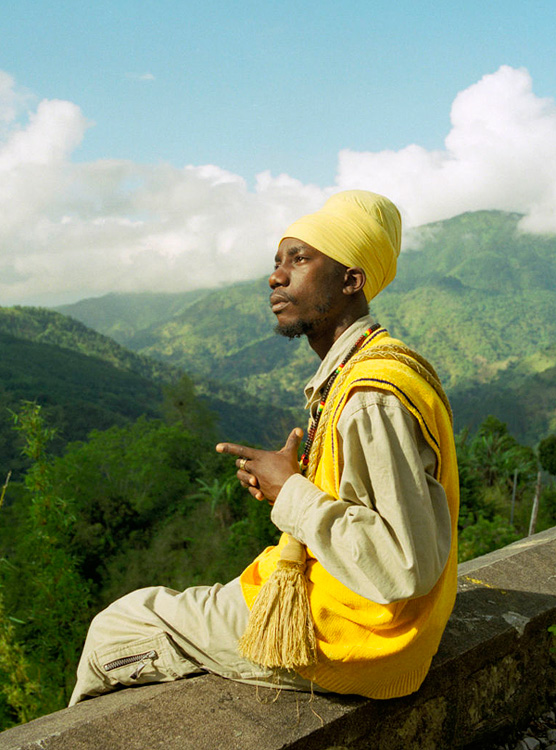 (Singer Sizzla)
参考文献
Etiópia Africa Black International Congress
(Ethiopian-African Black International Congress)
in BOBO-ASHANTI PORTUGUÊS
REDINGTON, Norman Hugh.
A sketch of rastafari history.
In BIGUP-RADIO.COM
accessed in September 2004.
SANKAR-ØYAN, Regina.
Impressions from a Congress.
In TRINIDAD-TOBAGO.NET
accessed in October 2004
Bobo Ashanti
WIKIPEDIA ONLINE
ZUELA, Sister.
Os Bobo-Ashanti
In RASTAFARI-REGGAE
类别
#Reggae