
Reggae · December 03, 2005
Check out Rafael Surforeggae's exclusive interview with Bambu Station, one of today's greatest bands!
Once again we have been blessed to have the opportunity to share knowledge and speak truth with some of the smartest people we have ever spo
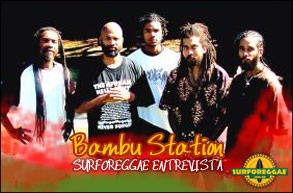
Once again we have been blessed to have the opportunity to share knowledge and speak truth with some of the smartest people we have ever spoken to. They were unique moments and I hope that you visitors can also dive into this world of the Virgin Islands that revealed bands like Midnite and acquire a little more knowledge and find out more about one of the biggest Reggae bands in the world – Bambu Station.
 Rafael: Could you talk a little about the history of the band Bambu Station? How was the beginning and everything?
Jalani Horton: In 1996 I had the idea of forming a band to play the songs I was writing. I've always liked reggae roots and other various forms of music, but I felt most “at home” playing Reggae. Back in 1996, I did a lot of research and thought a lot about what the band that was about to form would be called. Firstly I decided on the word “Station” which symbolizes a place or organization that is responsible for spreading music to the masses. I felt like I had a mission or at least a vision of what the band would be. Not just playing music, but spreading it around the world.
The name Bambu has a personal meaning behind it, and for me it means going back to my roots. It made sense to me that if I wanted to sing and create music from roots, it would be more evident if those roots came from myself.
In 1997 I recruited some musicians and the first formation of the band was born after a few months of rehearsals. We worked with this lineup for two years and recorded the album “Congo Moon” in the summer of 1999.
In December 1999, Andy Llanos joined the band and in May 2000 I decided to go in a different direction and continued to work only with him. We recorded the single “Amadou Diallo” with the help of Tuff Lion, who later, in 2002, joined the group. Warren Pedersen II joined the band in 2003 and we reached the current lineup. I could go into more detail, but for this question I think that's all for now (laughs).
Rafael: What do you think of the comparison between Bambu Station and the Midnite band?
Jalani Horton: We don't get asked much about this comparison with Midnite, but it's to be expected, as both bands are from the tiny Virgin Islands and play root Reggae in its purest form. We still share the same musical tastes that help us to appreciate even more the subtlety and nuances that make roots reggae what it is – an emotional and meditative experience.
Midnite is a great band, so if we are compared to them, we are on the right track. We are comfortable with our own identity and we believe we bring that to our music. What I think they have most in common is the “heavy bass” and the evident roots. If we are compared... then let it be “One blood, one heart, same emotion, same scars”
Rafael: Could you define each of the band's albums and talk about the importance of each of them for your career as a whole?
Jalani Horton: Bambu Station releases are:
Rafael: Could you talk a little about the history of the band Bambu Station? How was the beginning and everything?
Jalani Horton: In 1996 I had the idea of forming a band to play the songs I was writing. I've always liked reggae roots and other various forms of music, but I felt most “at home” playing Reggae. Back in 1996, I did a lot of research and thought a lot about what the band that was about to form would be called. Firstly I decided on the word “Station” which symbolizes a place or organization that is responsible for spreading music to the masses. I felt like I had a mission or at least a vision of what the band would be. Not just playing music, but spreading it around the world.
The name Bambu has a personal meaning behind it, and for me it means going back to my roots. It made sense to me that if I wanted to sing and create music from roots, it would be more evident if those roots came from myself.
In 1997 I recruited some musicians and the first formation of the band was born after a few months of rehearsals. We worked with this lineup for two years and recorded the album “Congo Moon” in the summer of 1999.
In December 1999, Andy Llanos joined the band and in May 2000 I decided to go in a different direction and continued to work only with him. We recorded the single “Amadou Diallo” with the help of Tuff Lion, who later, in 2002, joined the group. Warren Pedersen II joined the band in 2003 and we reached the current lineup. I could go into more detail, but for this question I think that's all for now (laughs).
Rafael: What do you think of the comparison between Bambu Station and the Midnite band?
Jalani Horton: We don't get asked much about this comparison with Midnite, but it's to be expected, as both bands are from the tiny Virgin Islands and play root Reggae in its purest form. We still share the same musical tastes that help us to appreciate even more the subtlety and nuances that make roots reggae what it is – an emotional and meditative experience.
Midnite is a great band, so if we are compared to them, we are on the right track. We are comfortable with our own identity and we believe we bring that to our music. What I think they have most in common is the “heavy bass” and the evident roots. If we are compared... then let it be “One blood, one heart, same emotion, same scars”
Rafael: Could you define each of the band's albums and talk about the importance of each of them for your career as a whole?
Jalani Horton: Bambu Station releases are:
 Tale Moon (1999): This was our first release, but it was quite limited in its quantity of copies, as we worked with the small label “High Rotation”. Even though it was limited, it received a lot of attention, with one song being selected for a compilation that aimed to help raise money for children with AIDS. We are very proud of this, as it is part of our mission to join hands with others whenever possible. When we travel to other countries we always try to do charity events, such as visits, conversations and shows with children who don't have the chance to come to us and listen to our music. Children are not just our future. Their condition represents the state of humanity on Planet Earth. Maybe “One Day” the world will see a “Congo Moon” (referring to the album “One Day” and “Congo Moon”).
Talkin’ Roots Volume I (2002): This release was very important to us as it helped bring recognition to many artists from the Virgin Islands who we felt deserved such attention. Artists like Iba, Star Lion Family, Natty Empress, Ahnk Watep, Dezarie and Yah Shiloh I are very powerful vocalists and songwriters. Talkin’ Roots I has been a blessing for us in that we can help spread good news about Virgin Islands artists.
One Day (2003): "One Day" helped us show the world what the Bambu Station sounds like. The album highlights man's relationship with the puzzle of life; practical questions, practical solutions offered with hope and conviction to lift the spirit of God. “One Day” was very special, as it was fun and recorded in a very natural way. It involved friends who had fun and enjoyed playing with each other. For most of the songs, we had Andy Llanos on bass, Phil Merchant (Midnite bassist) on drums and myself, Jalani Horton on guitar and keyboards. Soon after, Tuff Lion came and participated in the album, doing truly artisanal work with his guitar. He did not participate in the album from the beginning, as he was touring with major Reggae artists such as The Itals. “One Day” was the beginning for Bambu Station in order to bring positivity and awareness to the sound with the heart.
Talkin’ Roots II (2005): We felt that our goals were achieved with Volume I and that we would have to do a Volume II. Many artists from the Virgin Islands remained unnoticed or unrecorded and we wanted people to pay attention to them. We also record some very well-known artists from the Virgin Islands, such as Army and Danny I. This album will help us continue our efforts so that the diverse voices of the Virgin Islands can be heard around the world and also solidify an industry of artists there.
Our islands are very small, as are the opportunities, so every effort helps in this regard. This album is full of energy and fervor from St. Croix and St. Thomas along with other artists from Virginia and Pensilvânia on Estados Unidos, as well as the small island of Montseratt. In 2006 we will release our new album. For now the title is “Bird’s I View” but we may change as new songs are developed. At first we think we will be ready to release it in March. It is a very beautiful album and as “penetrating” as “One Day”, but with songs a little more hopeful and celebratory. We hope people enjoy it as much as we do.
Rafael: Please tell us a little about the Virgin Islands, its characteristics, such as culture, politics, society and everything else.
Jalani Horton: When we talk about the Virgin Islands, we talk about several islands with families spread across each of them. However, they are separated by the English and American governments (EUA), who are the supposed “owners”. Where we are, in the US Virgin Islands, there are St. John, St. Thomas and St. Croix, the biggest of them all. The first residents of these islands were Indians Chiboney, Arawaks and Caribenhos. They died when white men came and plundered the riches, kidnapped and raped native men and women and spread diseases that exterminated all these people.
Indigenous people no longer exist in the US Virgin Islands. In 1493, Cristóvão Colombo saw the islands and claimed that they would belong to Espanha. After that, there were centuries of wars between França, Inglaterra and Dinamarca for the right to possess the islands. Throughout this time, Africans were enslaved and sent to populate these islands to produce rum and sugar cane for export. In July 1848 a serious revolt took place in St. Croix and the governor proclaimed the end of slavery the following day.
In 1917 the Estados Unidos purchased St. Thomas, St. Croix and St. John from Dinamarca for 25 million dollars in gold to improve their military position in the Western Hemisphere. The islands were governed by the American Navy until the first governor was elected in 1970. Currently we elect governors every 4 years and senators every 2 years. The tourism-based economy was built by wealthy farmers who own most of the island today. It is no coincidence that they have made billions of dollars after strategically positioning themselves to reap the majority of what comes from the tourism industry. Our islands are highly influenced by African and Latin cultures. The Rastafari influence is very present, but Christianity is the predominant religion.
The most famous music in our land is Calypso (Caribbean rhythm) and we celebrate Carnaval on each island 3 times a year. Our politicians are mostly the same throughout the American islands. Everyone is fighting to get elected and making promises, but no one wants to make serious decisions to balance the budget and achieve realistic goals for the government. The word politician does not inspire much confidence and the population is very apathetic in this sense. Our government is fundamentally ineffective, visionless and inadequate. Our public schools are a disaster. Teachers are generally not valued and respected for their very important task of teaching our children and there is a lot of nepotism and camaraderie causing a highly negative impact on the government.
What I can say is that we may not be going through the worst at the moment, but it is still very difficult to have to digest this reality. Most of the time, life on our islands, as on most islands, is slow, with a tropical breeze, palm trees and crystal blue waters. We don't move fast and we don't riot with people. We are quite proud for whatever reason and are always ready to fight until the end for it. This is our character, our temperament. Our people come from suffering. The majority are part of the working class... anyway, it's a good land and has good people.
Rafael: We know that the record label Mt. Nebo Records is today one of the biggest sources of new artists from the root Reggae. How does this reflect on the music of the Virgin Islands?
Jalani Horton: Well... Mt. Nebo Records was founded by people from the islands and naturally promotes and distributes the music of its artists. The main struggle is to promote and do things with quality, positivity as well as boosting the music. There are many, many great singers and DJs on our little islands, they just need a chance to be heard and so we do everything and sacrifice to make that happen. We are not a big band with an already established career, but we still offer help to others who are not organized or informed like us. St. Croix represents the place of Reggae roots, but is one of several islands that were colonized and marginalized by the power of imperialism that operates to this day.
But the demand is not just for artists from St. Croix, but also from St. Thomas, Tortola, St. John and our neighbor Porto Rico. We will continue to look for new voices every year in addition to continuing our own band. Mt. Nebo Records in 2006 will release albums from various artists such as Ickarus, Niyorah, Kimbe Don, Bambu Station, Iba, Tuff Lion, Black Culture and Ijah Menelik. These names and many others deserve attention.
Rafael: Do the band members follow any religion? Which?
Jalani Horton: I am not a supporter of any religion. I wasn't educated with any of them, but I studied several and was always fascinated by the historical aspects, their impacts and contributions to society. I consider religion to be the most separatist thing in the world. For me it is destructive and was calculated and created by a society that has a mentality of controlling others and disguising the powers of God behind it. Not that I don't respect someone's religion, but thinking is always good and reality must be acknowledged or there will be no chance of true peace.
I think that if we deal with each person based on our actions, work and deeds, the world will be a wonderful place and we will really know who is who. Religion is a creation of man and not of Jah. Living as a correct person, this is the spirit of Jah and this is how we (Bambu Station) strive to live. Specifically, some band members follow Rastafari and others, like me, are adept at believing in God's righteousness that promotes physical and spiritual health.
Rafael: Where does the inspiration for the lyrics come from?
Jalani Horton: The lyrics come directly from experiences in my life. It's nothing dynamic or based on reading a particular book. It's just a general assessment and absorption of the things I've been able to discern or gain as wisdom. I strive to make the songs interesting to listen to and sing along to. Intuitively, I look at life through a poetic perspective. My words, thoughts and prayers are expressed in poetic terms, and real life is my inspiration. I don't know how different that is from other writers, but it's just my way. It's a vibe that's very difficult to describe.
Maybe I could say that my way of writing comes from a particular way of thinking. You may be walking and simply begin to vibrate in a particular spirit. I say, it's the inspiration of Jah using the pains or pleasures of a life and putting them into the songs. Vibrations are very funny things, but through Jah they are a blessing. The most important thing that comes first is the fact that my lyrics always come from the truth that I am informed about. God bless these vibrations and may I always recognize them.
Rafael: For you, is there any relationship between Reggae, ganja and religion Rastafari? Which ?
Warren Pedersen II: There is a relationship between ganja and faith Rastafari. The plant (marijuana) is seen as a gift from Jah for the use of humanity. It is a sacrament in the Rastafari faith that places humanity in a spiritual connection with the world, which is the creation of Jah. Looking from the medicinal side, ganja expands awareness and understanding of life, the universe and spirituality. Reggae comes from a Rastafari “platform” to express your faith and love for Jah, political changes affecting the people, and the pride and joy of finding one's true individual identity. Ganja has been included in some of Reggae's songs as an expression of the Rastafari faith, but it is not a requirement for Reggae or the Rastafari faith.
You don't have to smoke ganja to listen to reggae, play reggae or be a Rasta. Not all Rastafaris use ganja. Through the marketing of Rastafari, the extravagant use of marijuana has become a generalization that most people have made. If you ask a normal person today what a Rasta is, they will say, “It’s a person who has dreadlocks, smokes ganja and listens to reggae all day.” In fact, there is much more to it than that. The Reggae and faith Rasta is not just ganja.
Rafael: Tell us a little about the relationship between the major labels I-Grade Records, Mt. Nebo Records and artists from the Virgin Islands.
Jalani Horton: Mt. Nebo Records has worked and works with I-Grade, Sound VIZion and many labels and entities that are creating and giving strength to the positive music coming from the Virgin Islands. We (Bambu Station) appeared in the production of I-Grade's album “Yahadanai – One Atonement” and they appeared on the album “Talkin Roots 2”, producing the song “Do Good!”. As you can see, many musicians, distributors, producers and others who move music forward are working together for the common good.
Mt. Nebo Records has promoted tours by every conscientious artist in the Virgin Islands. This is very good, as commercialization and exploration (in a good way) comes from other places, capitalizing on the talents of small islands. The more these people work together, the more opportunities they can offer new artists aspiring to great careers.
Rafael: Bambu Station, Iba, Midnite and many others are raising the name of the Virgin Islands around the world. What do you think about this?
Jalani Horton: This is a good thing, because like many places, the Virgin Islands represent a lot about what is wrong with the Western mindset of ambition, capitalism, education, medicine and eating habits. Our islands are a microcosm of what is not working. Music helps create jobs and inspire others to always go deeper into their dreams, goals and visions. Elevating the name of this place is like elevating the minds of our neighbors, moving everyone to the spirit of god, which cannot be overthrown.
Rafael: What do you think about the new “course” that reggae is following in Jamaica and in many places around the world?
Jalani Horton: In a strange way, I don't keep up to date with what's popular or fashionable in the world of Reggae, Jamaica, etc. Unless I see a video or hear what someone is playing on a CD, I don't care. I don't usually go to clubs to have a good time and dance. I'm like a hermit in the studio, practicing guitar or another instrument. A while ago I found out about what is being produced and sold there.
There is certainly an audience for all this, and when I was just a student, I was certainly one of them. However, as I took a step forward to live the positive, I can't stand these negative works. They are destructive and affect many people. Currently, the media uses very effective resources and is able to sell negative images and destructive lifestyles that affect us all. Many men only care about money, this is proof that a lot of things have remained the same for thousands of years and maybe always will be, however, I don't have to accept that, that's why I sing my songs.
I sing trying to convey to others what I believe. Maybe it's just to keep myself sane, but with a little hope I can inspire, inform and help others find a path that makes them feel alive and know what life is really about... Wow, that was a really heavy question. Everyone has to find their way and do it before they do too much harm. Hopefully I've answered the question, but just to be sure, I'll come back and say, the new course as you said is nothing new. He is always present in our communities. Fortunately in some places positive music is still more publicized than this negative side.
Rafael: Where outside of the Virgin Islands have you had a great reception from the public?
Jalani Horton: We have been blessed with health, strength and the opportunity to see many different lands and meet many angels. We were very well received on the Hawaiian Islands of Maui, Oahu, Big Islando and Kauai. We travel to different communities in Israel. Dimoan, Kibbutz, Zeelim and two seats in Tel Aviv. The reaction in these places was very powerful. In one of these shows we had to return to the stage six times, due to requests from the public, which made us very happy. We recently traveled to Holanda and Bélgica and the shows were also very blessed.
There was a group of people who went to every show and drove several hours to see each one. We also played a bunch of shows on the West Coast with EUA, which is a really good place for roots music. There are activist communities there who welcomed us very well. We were literally blessed. We create opportunities and try to find those people who like our vibes. We are very hopeful and want to meet the Brasileiro people soon.
Rafael: Tell us a little about the image of Brasil in the Virgin Islands.
Jalani Horton: I spent a lot of time on Estados Unidos and can comment from that perspective, in addition to the Virgin Islands, of course. In reality, there are three images that are easily cited when talking about Brasil: Football, carnival and beautiful women. These are the three dominant images of Brasil and I believe this is so, as this is exactly what is promoted and publicized on television and in magazines. Although these images are very dominant, I had the opportunity to study your country and learned that it is much more wonderful and profound than people can imagine.
I studied Brasil in its colonial period and was fascinated by its history.
It is filled with diversity, knowledge and ancient people. It's a very rich story that I hope doesn't get lost in its modern existence. Most people don't know that Brasil has the largest population of black people and descendants outside of Africa. This fact had a very strong impact on the country's culture and energy. We hope to have the chance to spend a lot of time among people exchanging knowledge, feelings and aspirations. We would love to travel around the country and get to know the characteristics of each region. We talk a lot about the Brasil for those who love nature, saying everything that is in it. Brasil has always fascinated me and I hope to be there soon to appreciate people as well as be appreciated by them.
Rafael: The reality and difficult life in an underdeveloped, “third world” country has to do with Bambu Station's powerful and "aggressive" music and lyrics ?
Jalani Horton: Wow, that's as heavy as a bass line. You touched on something that is very important for our music. Sound is a funny thing. It is the vibration that comes from a certain source to our ears. Sounds affect our mood, emotions and souls. There are certain frequencies in sound that promote particular feelings that we are interested in.
We like to call them “earth tones”. Our music strives to be pleasant and meditative, to put people in the mood to contemplate things, to feel and relax and still receive the lyrics they hear. We are interested in exploring these realities of life and people's lives. We have been so oppressed and lived through difficult times and we share these feelings and their impact around the world. We hope that our music reaches people and helps them have better days or even moments. In reality, we are men playing straight from our souls.
There is no formula about this, it is strictly from our bloodstream to CD. That's what we try to be, pleasant. Talking a little about the term “third world”, it’s a very funny thing, isn’t it? What is first world, second world? I see them as instruments of psychological warfare. I define a first world country as one that has a government capable of affecting the lives of other nations. They are first world, first class hypocrites, manipulators and elitists.
Colonialism has devastated several nations that will never recover if they do not make radical changes. Without radical changes, suffering and despair will exist for millennia. Poverty, despair and so-called “third world” countries do not exist because they want them to. May the fire of Jah burn these bad vibes. Changes will one day come and Bambu Station will always continue playing its heavy music with informative lyrics that educate or spread love. We will never distort harmony, we will use it for kindness. God bless.
Rafael: The band has a good relationship with artists from the “old guard” of Reggae Jamaicano ? Quais ? Tell us a little about that.
Jalani Horton: I don't personally know many Reggae Jamaica artists, just a few. I can name two people with whom I spent very productive moments, which were Half Pint and Merciless. Currently Half Pint stayed with me and my friends and we participated in the million man march in Washington D.C (EUA's capital). This day was incredible, we felt like true descendants of Africans walking through the capital of Babylon.
Although I don't know many artists personally, several of them influenced me and made me desire truth, world history, African history, among other things.
I received many tips through songs and thoughts from Mutabaruka, David Hinds, The Wailers, Abyssinians, among others. Bunny Wailer's album “Protest” is imprinted in my mind. The lyrics, melodies, thoughts are very powerful. These artists helped develop a generation of soldiers who carry the banner of truth across our small islands and across the planet. Therefore, I have great relationships with artists Jamaicanos (laughs). May Jah bless the righteous.
Rafael: Policy and Reggae. What do you think of this relationship?
Jalani Horton: This is a question for hours of discussion (laughs). Politics is the behavior of some to influence and affect the politics and politicking of others. Reggae is a song born from the vibrations of people of African descent. Music developed in the nature of these people. It came from the flow of tropical life and in many angles it can be compared to blues and rhythm and blues. Remember that the blues is the root of most American music. Reggae is holistic and is much more than politics. It helps us dance, sing, and like no other music to comment on society.
Rafael: Why reggae and not another type of music?
Jalani Horton: Warren, the bass player's first love was the Jazz. He was trained on the violin and saxophone. Andy, our drummer, grew up playing music that has a great cultural vibe. The band members really grew up appreciating all types of music, but our lifestyle comes from the soil and reggae roots is what carries most of these “earth tones” that brings us back home. But don't be surprised if you ever see an album of salsa, jazz, R&B or something with our names on it. It probably wouldn't be released as Bambu Station, but we enjoy those styles of music too.
The vibrations of Cuba are powerful! Brasil, very powerful! We really like Puerto Rican, West African artists... I love the vibe of the pop group U2, Don Henley, Santana, Curtis Mayfield, The Eagles, The Commodores, EARTH, WIND & FIRE. And now the world is getting the chance to hear our music which contains influences from several of them. We play reggae, but our vibes are influenced by other styles too. The root represents our soul and Reggae is our main form of expression.
Rafael: What is Bambu Station's proposal when making Reggae?
Jalani Horton: We always want to do good. We love participating in charity events and we love using our music to bring people together. We really want to help improve the situation in the Virgin Islands. Children around here don't have much to look forward to. The schools are horrible, the teachers are treated poorly, and the government is built on nepotism. Our families are confused, our boys are becoming men with no sense of responsibility and Reggae is a way to bring positivity to these people. We hope that when we go to Brasil, we will be able to participate in some events at orphanages, schools or family centers.
Rafael: Bambu Station's main proposal is to play original roots reggae, or are you thinking about making a change in sound, as happened in one phase of the band Midnite?
Jalani Horton: Bambu Station will only play original roots reggae. This is who we are, and what interests us. If we do anything other than that, it certainly won't be like Bambu Station. We play live, we record live and we will live, live, live (laughs). I would love to record a reggae album roots with Sade. Although Midnite is changing their music a bit, when you see them live that's who they really are. Their singer (Vaughn Benjamin) is very versatile and that's why there are other projects that are not reggae roots.
Rafael: Tell us quickly about each of your first contact with music.
Warren Pedersen II: My first contact with music was with the piano, when I was six years old. My father is a musician and I have always been around music my entire life. As I grew up my interest expanded. After the piano came the violin, followed by the saxophone, bass and guitar.
Jalani Horton: My first contact with music was when my mother and aunts played songs from Calypso (Caribbean rhythm) and Wailers on the old player, right at the beginning of Reggae. I wasn't exposed to instruments until I was 9 years old. At 9 I played the trombone for six months and after that I didn't play any instrument until I was 27. From the age of 27 I have been teaching myself how to play the piano, harmonica, guitar, drums and bass.
Now I see that music is in my blood. My grandparents were very good musicians and were quite successful. Music is a blessing, may Jah bless you.
Rafael: What about the band members' families? Were you encouraged at first or not? And now ?
Jalani Horton: Music and especially roots music is very difficult. There's not a lot of money if you're not touring big venues and selling a lot of records. We breathe music and every thought we have we try to put into music. Some of us have lost our families because of our commitment to it. Some people think we're crazy for making the music we make for a living. Our families like our music and are happy for us and our persistence. But a lot has been lost to time and nothing can erase that.
Rafael: Do you know bands from Reggae Brasileiras? Which ?
Jalani Horton: I've heard several Reggae Brasileiras bands. But the one that caught my attention the most and the one I'm most familiar with is the Tribo de Jah. I recently went to Atlanta – EUA to see the Tribe. Wow... it's not because they're blind that impressed me. What impressed me was that when they play roots, they are roots to the core. The touch, approach and spirit is Reggae ! It's roots! They don't act exaggeratedly but rather respect the sound and contribution of each instrument to the music. I really enjoyed their show and the people at the venue were also blown away. The band plays very well, they are cohesive and interact very well with the public. I hope one day I can share the stage with them or even have the chance to invite them to play on our Islands. Bands like this are a model for us. I hope to get to know the song Brasileira even more, the good vibes, of course.
Rafael: Bambu Station want to come to Brasil? Why is this arrival important for the band?
Jalani Horton: Brasil? Well... I think you already know the answer, don't you? (laughs) I'll probably live in Brasil someday. History is my vibration. Warren also loves history. The Virgin Islands have a lot of diversity, just like Brasil. I really want to see how the Brasileiros will respond to our vibration, our music. If people like it, it will be an honor.
Rafael: What do you think about the spread of reggae in the media and consequently the emergence of commercial bands?
Jalani Horton: I don't worry too much about the spread of reggae in the media. The Reggae, even if it is commercial or original, mostly offers a spirit of harmony and honesty that is not destructive to people. Commercial bands have their place, as they bridge the gap between Reggae's new fans and roots reggae music. I don't have much to say about them. The difference is that we don't play to entertain, but to share knowledge, inform and bring the truth to people.
Rafael: Leaving music aside for a bit, what were each of you doing before entering this world?
Jalani Horton: Before deciding to pursue a career as a musician, I graduated in Political Science and lived day to day without knowing what I really wanted to do. After years I finally found something I liked doing. Since 1992 I have been helping families resolve issues and improve their communication skills. Somehow I will always do this in my life, whether through music or my profession.
Warren Pedersen II: I always wanted to be a musician. Before being part of Bambu Station, I graduated in History. While I was at university, I was involved in music as much as possible. I participated in several performances in a jazz band and worked on the sound team of a concert promoter. I was always surrounded by music and in the last year of my studies I realized that it called me. I know I have been blessed with a talent and I need to explore this gift given to me by the creator.
Rafael: Thank you very much for everything. We love the word, sound and power of the Bambu Station. Please leave a message for your Brasil fans.
Jalani Horton: We thank you and the people at Brasil who express interest in our work. Thanks to people like you, we are motivated to continue, even with logistical and financial obstacles. We really hope to be able to visit them in 2006, and when we do, we will all be happy, we will sing together, celebrate what we can be, are and need to be. Until then... “Every man makes a difference, everything makes a difference... everyone makes a difference”. Peace.
Tale Moon (1999): This was our first release, but it was quite limited in its quantity of copies, as we worked with the small label “High Rotation”. Even though it was limited, it received a lot of attention, with one song being selected for a compilation that aimed to help raise money for children with AIDS. We are very proud of this, as it is part of our mission to join hands with others whenever possible. When we travel to other countries we always try to do charity events, such as visits, conversations and shows with children who don't have the chance to come to us and listen to our music. Children are not just our future. Their condition represents the state of humanity on Planet Earth. Maybe “One Day” the world will see a “Congo Moon” (referring to the album “One Day” and “Congo Moon”).
Talkin’ Roots Volume I (2002): This release was very important to us as it helped bring recognition to many artists from the Virgin Islands who we felt deserved such attention. Artists like Iba, Star Lion Family, Natty Empress, Ahnk Watep, Dezarie and Yah Shiloh I are very powerful vocalists and songwriters. Talkin’ Roots I has been a blessing for us in that we can help spread good news about Virgin Islands artists.
One Day (2003): "One Day" helped us show the world what the Bambu Station sounds like. The album highlights man's relationship with the puzzle of life; practical questions, practical solutions offered with hope and conviction to lift the spirit of God. “One Day” was very special, as it was fun and recorded in a very natural way. It involved friends who had fun and enjoyed playing with each other. For most of the songs, we had Andy Llanos on bass, Phil Merchant (Midnite bassist) on drums and myself, Jalani Horton on guitar and keyboards. Soon after, Tuff Lion came and participated in the album, doing truly artisanal work with his guitar. He did not participate in the album from the beginning, as he was touring with major Reggae artists such as The Itals. “One Day” was the beginning for Bambu Station in order to bring positivity and awareness to the sound with the heart.
Talkin’ Roots II (2005): We felt that our goals were achieved with Volume I and that we would have to do a Volume II. Many artists from the Virgin Islands remained unnoticed or unrecorded and we wanted people to pay attention to them. We also record some very well-known artists from the Virgin Islands, such as Army and Danny I. This album will help us continue our efforts so that the diverse voices of the Virgin Islands can be heard around the world and also solidify an industry of artists there.
Our islands are very small, as are the opportunities, so every effort helps in this regard. This album is full of energy and fervor from St. Croix and St. Thomas along with other artists from Virginia and Pensilvânia on Estados Unidos, as well as the small island of Montseratt. In 2006 we will release our new album. For now the title is “Bird’s I View” but we may change as new songs are developed. At first we think we will be ready to release it in March. It is a very beautiful album and as “penetrating” as “One Day”, but with songs a little more hopeful and celebratory. We hope people enjoy it as much as we do.
Rafael: Please tell us a little about the Virgin Islands, its characteristics, such as culture, politics, society and everything else.
Jalani Horton: When we talk about the Virgin Islands, we talk about several islands with families spread across each of them. However, they are separated by the English and American governments (EUA), who are the supposed “owners”. Where we are, in the US Virgin Islands, there are St. John, St. Thomas and St. Croix, the biggest of them all. The first residents of these islands were Indians Chiboney, Arawaks and Caribenhos. They died when white men came and plundered the riches, kidnapped and raped native men and women and spread diseases that exterminated all these people.
Indigenous people no longer exist in the US Virgin Islands. In 1493, Cristóvão Colombo saw the islands and claimed that they would belong to Espanha. After that, there were centuries of wars between França, Inglaterra and Dinamarca for the right to possess the islands. Throughout this time, Africans were enslaved and sent to populate these islands to produce rum and sugar cane for export. In July 1848 a serious revolt took place in St. Croix and the governor proclaimed the end of slavery the following day.
In 1917 the Estados Unidos purchased St. Thomas, St. Croix and St. John from Dinamarca for 25 million dollars in gold to improve their military position in the Western Hemisphere. The islands were governed by the American Navy until the first governor was elected in 1970. Currently we elect governors every 4 years and senators every 2 years. The tourism-based economy was built by wealthy farmers who own most of the island today. It is no coincidence that they have made billions of dollars after strategically positioning themselves to reap the majority of what comes from the tourism industry. Our islands are highly influenced by African and Latin cultures. The Rastafari influence is very present, but Christianity is the predominant religion.
The most famous music in our land is Calypso (Caribbean rhythm) and we celebrate Carnaval on each island 3 times a year. Our politicians are mostly the same throughout the American islands. Everyone is fighting to get elected and making promises, but no one wants to make serious decisions to balance the budget and achieve realistic goals for the government. The word politician does not inspire much confidence and the population is very apathetic in this sense. Our government is fundamentally ineffective, visionless and inadequate. Our public schools are a disaster. Teachers are generally not valued and respected for their very important task of teaching our children and there is a lot of nepotism and camaraderie causing a highly negative impact on the government.
What I can say is that we may not be going through the worst at the moment, but it is still very difficult to have to digest this reality. Most of the time, life on our islands, as on most islands, is slow, with a tropical breeze, palm trees and crystal blue waters. We don't move fast and we don't riot with people. We are quite proud for whatever reason and are always ready to fight until the end for it. This is our character, our temperament. Our people come from suffering. The majority are part of the working class... anyway, it's a good land and has good people.
Rafael: We know that the record label Mt. Nebo Records is today one of the biggest sources of new artists from the root Reggae. How does this reflect on the music of the Virgin Islands?
Jalani Horton: Well... Mt. Nebo Records was founded by people from the islands and naturally promotes and distributes the music of its artists. The main struggle is to promote and do things with quality, positivity as well as boosting the music. There are many, many great singers and DJs on our little islands, they just need a chance to be heard and so we do everything and sacrifice to make that happen. We are not a big band with an already established career, but we still offer help to others who are not organized or informed like us. St. Croix represents the place of Reggae roots, but is one of several islands that were colonized and marginalized by the power of imperialism that operates to this day.
But the demand is not just for artists from St. Croix, but also from St. Thomas, Tortola, St. John and our neighbor Porto Rico. We will continue to look for new voices every year in addition to continuing our own band. Mt. Nebo Records in 2006 will release albums from various artists such as Ickarus, Niyorah, Kimbe Don, Bambu Station, Iba, Tuff Lion, Black Culture and Ijah Menelik. These names and many others deserve attention.
Rafael: Do the band members follow any religion? Which?
Jalani Horton: I am not a supporter of any religion. I wasn't educated with any of them, but I studied several and was always fascinated by the historical aspects, their impacts and contributions to society. I consider religion to be the most separatist thing in the world. For me it is destructive and was calculated and created by a society that has a mentality of controlling others and disguising the powers of God behind it. Not that I don't respect someone's religion, but thinking is always good and reality must be acknowledged or there will be no chance of true peace.
I think that if we deal with each person based on our actions, work and deeds, the world will be a wonderful place and we will really know who is who. Religion is a creation of man and not of Jah. Living as a correct person, this is the spirit of Jah and this is how we (Bambu Station) strive to live. Specifically, some band members follow Rastafari and others, like me, are adept at believing in God's righteousness that promotes physical and spiritual health.
Rafael: Where does the inspiration for the lyrics come from?
Jalani Horton: The lyrics come directly from experiences in my life. It's nothing dynamic or based on reading a particular book. It's just a general assessment and absorption of the things I've been able to discern or gain as wisdom. I strive to make the songs interesting to listen to and sing along to. Intuitively, I look at life through a poetic perspective. My words, thoughts and prayers are expressed in poetic terms, and real life is my inspiration. I don't know how different that is from other writers, but it's just my way. It's a vibe that's very difficult to describe.
Maybe I could say that my way of writing comes from a particular way of thinking. You may be walking and simply begin to vibrate in a particular spirit. I say, it's the inspiration of Jah using the pains or pleasures of a life and putting them into the songs. Vibrations are very funny things, but through Jah they are a blessing. The most important thing that comes first is the fact that my lyrics always come from the truth that I am informed about. God bless these vibrations and may I always recognize them.
Rafael: For you, is there any relationship between Reggae, ganja and religion Rastafari? Which ?
Warren Pedersen II: There is a relationship between ganja and faith Rastafari. The plant (marijuana) is seen as a gift from Jah for the use of humanity. It is a sacrament in the Rastafari faith that places humanity in a spiritual connection with the world, which is the creation of Jah. Looking from the medicinal side, ganja expands awareness and understanding of life, the universe and spirituality. Reggae comes from a Rastafari “platform” to express your faith and love for Jah, political changes affecting the people, and the pride and joy of finding one's true individual identity. Ganja has been included in some of Reggae's songs as an expression of the Rastafari faith, but it is not a requirement for Reggae or the Rastafari faith.
You don't have to smoke ganja to listen to reggae, play reggae or be a Rasta. Not all Rastafaris use ganja. Through the marketing of Rastafari, the extravagant use of marijuana has become a generalization that most people have made. If you ask a normal person today what a Rasta is, they will say, “It’s a person who has dreadlocks, smokes ganja and listens to reggae all day.” In fact, there is much more to it than that. The Reggae and faith Rasta is not just ganja.
Rafael: Tell us a little about the relationship between the major labels I-Grade Records, Mt. Nebo Records and artists from the Virgin Islands.
Jalani Horton: Mt. Nebo Records has worked and works with I-Grade, Sound VIZion and many labels and entities that are creating and giving strength to the positive music coming from the Virgin Islands. We (Bambu Station) appeared in the production of I-Grade's album “Yahadanai – One Atonement” and they appeared on the album “Talkin Roots 2”, producing the song “Do Good!”. As you can see, many musicians, distributors, producers and others who move music forward are working together for the common good.
Mt. Nebo Records has promoted tours by every conscientious artist in the Virgin Islands. This is very good, as commercialization and exploration (in a good way) comes from other places, capitalizing on the talents of small islands. The more these people work together, the more opportunities they can offer new artists aspiring to great careers.
Rafael: Bambu Station, Iba, Midnite and many others are raising the name of the Virgin Islands around the world. What do you think about this?
Jalani Horton: This is a good thing, because like many places, the Virgin Islands represent a lot about what is wrong with the Western mindset of ambition, capitalism, education, medicine and eating habits. Our islands are a microcosm of what is not working. Music helps create jobs and inspire others to always go deeper into their dreams, goals and visions. Elevating the name of this place is like elevating the minds of our neighbors, moving everyone to the spirit of god, which cannot be overthrown.
Rafael: What do you think about the new “course” that reggae is following in Jamaica and in many places around the world?
Jalani Horton: In a strange way, I don't keep up to date with what's popular or fashionable in the world of Reggae, Jamaica, etc. Unless I see a video or hear what someone is playing on a CD, I don't care. I don't usually go to clubs to have a good time and dance. I'm like a hermit in the studio, practicing guitar or another instrument. A while ago I found out about what is being produced and sold there.
There is certainly an audience for all this, and when I was just a student, I was certainly one of them. However, as I took a step forward to live the positive, I can't stand these negative works. They are destructive and affect many people. Currently, the media uses very effective resources and is able to sell negative images and destructive lifestyles that affect us all. Many men only care about money, this is proof that a lot of things have remained the same for thousands of years and maybe always will be, however, I don't have to accept that, that's why I sing my songs.
I sing trying to convey to others what I believe. Maybe it's just to keep myself sane, but with a little hope I can inspire, inform and help others find a path that makes them feel alive and know what life is really about... Wow, that was a really heavy question. Everyone has to find their way and do it before they do too much harm. Hopefully I've answered the question, but just to be sure, I'll come back and say, the new course as you said is nothing new. He is always present in our communities. Fortunately in some places positive music is still more publicized than this negative side.
Rafael: Where outside of the Virgin Islands have you had a great reception from the public?
Jalani Horton: We have been blessed with health, strength and the opportunity to see many different lands and meet many angels. We were very well received on the Hawaiian Islands of Maui, Oahu, Big Islando and Kauai. We travel to different communities in Israel. Dimoan, Kibbutz, Zeelim and two seats in Tel Aviv. The reaction in these places was very powerful. In one of these shows we had to return to the stage six times, due to requests from the public, which made us very happy. We recently traveled to Holanda and Bélgica and the shows were also very blessed.
There was a group of people who went to every show and drove several hours to see each one. We also played a bunch of shows on the West Coast with EUA, which is a really good place for roots music. There are activist communities there who welcomed us very well. We were literally blessed. We create opportunities and try to find those people who like our vibes. We are very hopeful and want to meet the Brasileiro people soon.
Rafael: Tell us a little about the image of Brasil in the Virgin Islands.
Jalani Horton: I spent a lot of time on Estados Unidos and can comment from that perspective, in addition to the Virgin Islands, of course. In reality, there are three images that are easily cited when talking about Brasil: Football, carnival and beautiful women. These are the three dominant images of Brasil and I believe this is so, as this is exactly what is promoted and publicized on television and in magazines. Although these images are very dominant, I had the opportunity to study your country and learned that it is much more wonderful and profound than people can imagine.
I studied Brasil in its colonial period and was fascinated by its history.
It is filled with diversity, knowledge and ancient people. It's a very rich story that I hope doesn't get lost in its modern existence. Most people don't know that Brasil has the largest population of black people and descendants outside of Africa. This fact had a very strong impact on the country's culture and energy. We hope to have the chance to spend a lot of time among people exchanging knowledge, feelings and aspirations. We would love to travel around the country and get to know the characteristics of each region. We talk a lot about the Brasil for those who love nature, saying everything that is in it. Brasil has always fascinated me and I hope to be there soon to appreciate people as well as be appreciated by them.
Rafael: The reality and difficult life in an underdeveloped, “third world” country has to do with Bambu Station's powerful and "aggressive" music and lyrics ?
Jalani Horton: Wow, that's as heavy as a bass line. You touched on something that is very important for our music. Sound is a funny thing. It is the vibration that comes from a certain source to our ears. Sounds affect our mood, emotions and souls. There are certain frequencies in sound that promote particular feelings that we are interested in.
We like to call them “earth tones”. Our music strives to be pleasant and meditative, to put people in the mood to contemplate things, to feel and relax and still receive the lyrics they hear. We are interested in exploring these realities of life and people's lives. We have been so oppressed and lived through difficult times and we share these feelings and their impact around the world. We hope that our music reaches people and helps them have better days or even moments. In reality, we are men playing straight from our souls.
There is no formula about this, it is strictly from our bloodstream to CD. That's what we try to be, pleasant. Talking a little about the term “third world”, it’s a very funny thing, isn’t it? What is first world, second world? I see them as instruments of psychological warfare. I define a first world country as one that has a government capable of affecting the lives of other nations. They are first world, first class hypocrites, manipulators and elitists.
Colonialism has devastated several nations that will never recover if they do not make radical changes. Without radical changes, suffering and despair will exist for millennia. Poverty, despair and so-called “third world” countries do not exist because they want them to. May the fire of Jah burn these bad vibes. Changes will one day come and Bambu Station will always continue playing its heavy music with informative lyrics that educate or spread love. We will never distort harmony, we will use it for kindness. God bless.
Rafael: The band has a good relationship with artists from the “old guard” of Reggae Jamaicano ? Quais ? Tell us a little about that.
Jalani Horton: I don't personally know many Reggae Jamaica artists, just a few. I can name two people with whom I spent very productive moments, which were Half Pint and Merciless. Currently Half Pint stayed with me and my friends and we participated in the million man march in Washington D.C (EUA's capital). This day was incredible, we felt like true descendants of Africans walking through the capital of Babylon.
Although I don't know many artists personally, several of them influenced me and made me desire truth, world history, African history, among other things.
I received many tips through songs and thoughts from Mutabaruka, David Hinds, The Wailers, Abyssinians, among others. Bunny Wailer's album “Protest” is imprinted in my mind. The lyrics, melodies, thoughts are very powerful. These artists helped develop a generation of soldiers who carry the banner of truth across our small islands and across the planet. Therefore, I have great relationships with artists Jamaicanos (laughs). May Jah bless the righteous.
Rafael: Policy and Reggae. What do you think of this relationship?
Jalani Horton: This is a question for hours of discussion (laughs). Politics is the behavior of some to influence and affect the politics and politicking of others. Reggae is a song born from the vibrations of people of African descent. Music developed in the nature of these people. It came from the flow of tropical life and in many angles it can be compared to blues and rhythm and blues. Remember that the blues is the root of most American music. Reggae is holistic and is much more than politics. It helps us dance, sing, and like no other music to comment on society.
Rafael: Why reggae and not another type of music?
Jalani Horton: Warren, the bass player's first love was the Jazz. He was trained on the violin and saxophone. Andy, our drummer, grew up playing music that has a great cultural vibe. The band members really grew up appreciating all types of music, but our lifestyle comes from the soil and reggae roots is what carries most of these “earth tones” that brings us back home. But don't be surprised if you ever see an album of salsa, jazz, R&B or something with our names on it. It probably wouldn't be released as Bambu Station, but we enjoy those styles of music too.
The vibrations of Cuba are powerful! Brasil, very powerful! We really like Puerto Rican, West African artists... I love the vibe of the pop group U2, Don Henley, Santana, Curtis Mayfield, The Eagles, The Commodores, EARTH, WIND & FIRE. And now the world is getting the chance to hear our music which contains influences from several of them. We play reggae, but our vibes are influenced by other styles too. The root represents our soul and Reggae is our main form of expression.
Rafael: What is Bambu Station's proposal when making Reggae?
Jalani Horton: We always want to do good. We love participating in charity events and we love using our music to bring people together. We really want to help improve the situation in the Virgin Islands. Children around here don't have much to look forward to. The schools are horrible, the teachers are treated poorly, and the government is built on nepotism. Our families are confused, our boys are becoming men with no sense of responsibility and Reggae is a way to bring positivity to these people. We hope that when we go to Brasil, we will be able to participate in some events at orphanages, schools or family centers.
Rafael: Bambu Station's main proposal is to play original roots reggae, or are you thinking about making a change in sound, as happened in one phase of the band Midnite?
Jalani Horton: Bambu Station will only play original roots reggae. This is who we are, and what interests us. If we do anything other than that, it certainly won't be like Bambu Station. We play live, we record live and we will live, live, live (laughs). I would love to record a reggae album roots with Sade. Although Midnite is changing their music a bit, when you see them live that's who they really are. Their singer (Vaughn Benjamin) is very versatile and that's why there are other projects that are not reggae roots.
Rafael: Tell us quickly about each of your first contact with music.
Warren Pedersen II: My first contact with music was with the piano, when I was six years old. My father is a musician and I have always been around music my entire life. As I grew up my interest expanded. After the piano came the violin, followed by the saxophone, bass and guitar.
Jalani Horton: My first contact with music was when my mother and aunts played songs from Calypso (Caribbean rhythm) and Wailers on the old player, right at the beginning of Reggae. I wasn't exposed to instruments until I was 9 years old. At 9 I played the trombone for six months and after that I didn't play any instrument until I was 27. From the age of 27 I have been teaching myself how to play the piano, harmonica, guitar, drums and bass.
Now I see that music is in my blood. My grandparents were very good musicians and were quite successful. Music is a blessing, may Jah bless you.
Rafael: What about the band members' families? Were you encouraged at first or not? And now ?
Jalani Horton: Music and especially roots music is very difficult. There's not a lot of money if you're not touring big venues and selling a lot of records. We breathe music and every thought we have we try to put into music. Some of us have lost our families because of our commitment to it. Some people think we're crazy for making the music we make for a living. Our families like our music and are happy for us and our persistence. But a lot has been lost to time and nothing can erase that.
Rafael: Do you know bands from Reggae Brasileiras? Which ?
Jalani Horton: I've heard several Reggae Brasileiras bands. But the one that caught my attention the most and the one I'm most familiar with is the Tribo de Jah. I recently went to Atlanta – EUA to see the Tribe. Wow... it's not because they're blind that impressed me. What impressed me was that when they play roots, they are roots to the core. The touch, approach and spirit is Reggae ! It's roots! They don't act exaggeratedly but rather respect the sound and contribution of each instrument to the music. I really enjoyed their show and the people at the venue were also blown away. The band plays very well, they are cohesive and interact very well with the public. I hope one day I can share the stage with them or even have the chance to invite them to play on our Islands. Bands like this are a model for us. I hope to get to know the song Brasileira even more, the good vibes, of course.
Rafael: Bambu Station want to come to Brasil? Why is this arrival important for the band?
Jalani Horton: Brasil? Well... I think you already know the answer, don't you? (laughs) I'll probably live in Brasil someday. History is my vibration. Warren also loves history. The Virgin Islands have a lot of diversity, just like Brasil. I really want to see how the Brasileiros will respond to our vibration, our music. If people like it, it will be an honor.
Rafael: What do you think about the spread of reggae in the media and consequently the emergence of commercial bands?
Jalani Horton: I don't worry too much about the spread of reggae in the media. The Reggae, even if it is commercial or original, mostly offers a spirit of harmony and honesty that is not destructive to people. Commercial bands have their place, as they bridge the gap between Reggae's new fans and roots reggae music. I don't have much to say about them. The difference is that we don't play to entertain, but to share knowledge, inform and bring the truth to people.
Rafael: Leaving music aside for a bit, what were each of you doing before entering this world?
Jalani Horton: Before deciding to pursue a career as a musician, I graduated in Political Science and lived day to day without knowing what I really wanted to do. After years I finally found something I liked doing. Since 1992 I have been helping families resolve issues and improve their communication skills. Somehow I will always do this in my life, whether through music or my profession.
Warren Pedersen II: I always wanted to be a musician. Before being part of Bambu Station, I graduated in History. While I was at university, I was involved in music as much as possible. I participated in several performances in a jazz band and worked on the sound team of a concert promoter. I was always surrounded by music and in the last year of my studies I realized that it called me. I know I have been blessed with a talent and I need to explore this gift given to me by the creator.
Rafael: Thank you very much for everything. We love the word, sound and power of the Bambu Station. Please leave a message for your Brasil fans.
Jalani Horton: We thank you and the people at Brasil who express interest in our work. Thanks to people like you, we are motivated to continue, even with logistical and financial obstacles. We really hope to be able to visit them in 2006, and when we do, we will all be happy, we will sing together, celebrate what we can be, are and need to be. Until then... “Every man makes a difference, everything makes a difference... everyone makes a difference”. Peace.
THE INTERVIEW
Rafael: Could you talk a little about the history of the band Bambu Station? How was the beginning and everything?
Jalani Horton: In 1996 I had the idea of forming a band to play the songs I was writing. I've always liked reggae roots and other various forms of music, but I felt most “at home” playing Reggae. Back in 1996, I did a lot of research and thought a lot about what the band that was about to form would be called. Firstly I decided on the word “Station” which symbolizes a place or organization that is responsible for spreading music to the masses. I felt like I had a mission or at least a vision of what the band would be. Not just playing music, but spreading it around the world.
The name Bambu has a personal meaning behind it, and for me it means going back to my roots. It made sense to me that if I wanted to sing and create music from roots, it would be more evident if those roots came from myself.
In 1997 I recruited some musicians and the first formation of the band was born after a few months of rehearsals. We worked with this lineup for two years and recorded the album “Congo Moon” in the summer of 1999.
In December 1999, Andy Llanos joined the band and in May 2000 I decided to go in a different direction and continued to work only with him. We recorded the single “Amadou Diallo” with the help of Tuff Lion, who later, in 2002, joined the group. Warren Pedersen II joined the band in 2003 and we reached the current lineup. I could go into more detail, but for this question I think that's all for now (laughs).
Rafael: What do you think of the comparison between Bambu Station and the Midnite band?
Jalani Horton: We don't get asked much about this comparison with Midnite, but it's to be expected, as both bands are from the tiny Virgin Islands and play root Reggae in its purest form. We still share the same musical tastes that help us to appreciate even more the subtlety and nuances that make roots reggae what it is – an emotional and meditative experience.
Midnite is a great band, so if we are compared to them, we are on the right track. We are comfortable with our own identity and we believe we bring that to our music. What I think they have most in common is the “heavy bass” and the evident roots. If we are compared... then let it be “One blood, one heart, same emotion, same scars”
Rafael: Could you define each of the band's albums and talk about the importance of each of them for your career as a whole?
Jalani Horton: Bambu Station releases are:
Tale Moon (1999): This was our first release, but it was quite limited in its quantity of copies, as we worked with the small label “High Rotation”. Even though it was limited, it received a lot of attention, with one song being selected for a compilation that aimed to help raise money for children with AIDS. We are very proud of this, as it is part of our mission to join hands with others whenever possible. When we travel to other countries we always try to do charity events, such as visits, conversations and shows with children who don't have the chance to come to us and listen to our music. Children are not just our future. Their condition represents the state of humanity on Planet Earth. Maybe “One Day” the world will see a “Congo Moon” (referring to the album “One Day” and “Congo Moon”).
Talkin’ Roots Volume I (2002): This release was very important to us as it helped bring recognition to many artists from the Virgin Islands who we felt deserved such attention. Artists like Iba, Star Lion Family, Natty Empress, Ahnk Watep, Dezarie and Yah Shiloh I are very powerful vocalists and songwriters. Talkin’ Roots I has been a blessing for us in that we can help spread good news about Virgin Islands artists.
One Day (2003): "One Day" helped us show the world what the Bambu Station sounds like. The album highlights man's relationship with the puzzle of life; practical questions, practical solutions offered with hope and conviction to lift the spirit of God. “One Day” was very special, as it was fun and recorded in a very natural way. It involved friends who had fun and enjoyed playing with each other. For most of the songs, we had Andy Llanos on bass, Phil Merchant (Midnite bassist) on drums and myself, Jalani Horton on guitar and keyboards. Soon after, Tuff Lion came and participated in the album, doing truly artisanal work with his guitar. He did not participate in the album from the beginning, as he was touring with major Reggae artists such as The Itals. “One Day” was the beginning for Bambu Station in order to bring positivity and awareness to the sound with the heart.
Talkin’ Roots II (2005): We felt that our goals were achieved with Volume I and that we would have to do a Volume II. Many artists from the Virgin Islands remained unnoticed or unrecorded and we wanted people to pay attention to them. We also record some very well-known artists from the Virgin Islands, such as Army and Danny I. This album will help us continue our efforts so that the diverse voices of the Virgin Islands can be heard around the world and also solidify an industry of artists there.
Our islands are very small, as are the opportunities, so every effort helps in this regard. This album is full of energy and fervor from St. Croix and St. Thomas along with other artists from Virginia and Pensilvânia on Estados Unidos, as well as the small island of Montseratt. In 2006 we will release our new album. For now the title is “Bird’s I View” but we may change as new songs are developed. At first we think we will be ready to release it in March. It is a very beautiful album and as “penetrating” as “One Day”, but with songs a little more hopeful and celebratory. We hope people enjoy it as much as we do.
Rafael: Please tell us a little about the Virgin Islands, its characteristics, such as culture, politics, society and everything else.
Jalani Horton: When we talk about the Virgin Islands, we talk about several islands with families spread across each of them. However, they are separated by the English and American governments (EUA), who are the supposed “owners”. Where we are, in the US Virgin Islands, there are St. John, St. Thomas and St. Croix, the biggest of them all. The first residents of these islands were Indians Chiboney, Arawaks and Caribenhos. They died when white men came and plundered the riches, kidnapped and raped native men and women and spread diseases that exterminated all these people.
Indigenous people no longer exist in the US Virgin Islands. In 1493, Cristóvão Colombo saw the islands and claimed that they would belong to Espanha. After that, there were centuries of wars between França, Inglaterra and Dinamarca for the right to possess the islands. Throughout this time, Africans were enslaved and sent to populate these islands to produce rum and sugar cane for export. In July 1848 a serious revolt took place in St. Croix and the governor proclaimed the end of slavery the following day.
In 1917 the Estados Unidos purchased St. Thomas, St. Croix and St. John from Dinamarca for 25 million dollars in gold to improve their military position in the Western Hemisphere. The islands were governed by the American Navy until the first governor was elected in 1970. Currently we elect governors every 4 years and senators every 2 years. The tourism-based economy was built by wealthy farmers who own most of the island today. It is no coincidence that they have made billions of dollars after strategically positioning themselves to reap the majority of what comes from the tourism industry. Our islands are highly influenced by African and Latin cultures. The Rastafari influence is very present, but Christianity is the predominant religion.
The most famous music in our land is Calypso (Caribbean rhythm) and we celebrate Carnaval on each island 3 times a year. Our politicians are mostly the same throughout the American islands. Everyone is fighting to get elected and making promises, but no one wants to make serious decisions to balance the budget and achieve realistic goals for the government. The word politician does not inspire much confidence and the population is very apathetic in this sense. Our government is fundamentally ineffective, visionless and inadequate. Our public schools are a disaster. Teachers are generally not valued and respected for their very important task of teaching our children and there is a lot of nepotism and camaraderie causing a highly negative impact on the government.
What I can say is that we may not be going through the worst at the moment, but it is still very difficult to have to digest this reality. Most of the time, life on our islands, as on most islands, is slow, with a tropical breeze, palm trees and crystal blue waters. We don't move fast and we don't riot with people. We are quite proud for whatever reason and are always ready to fight until the end for it. This is our character, our temperament. Our people come from suffering. The majority are part of the working class... anyway, it's a good land and has good people.
Rafael: We know that the record label Mt. Nebo Records is today one of the biggest sources of new artists from the root Reggae. How does this reflect on the music of the Virgin Islands?
Jalani Horton: Well... Mt. Nebo Records was founded by people from the islands and naturally promotes and distributes the music of its artists. The main struggle is to promote and do things with quality, positivity as well as boosting the music. There are many, many great singers and DJs on our little islands, they just need a chance to be heard and so we do everything and sacrifice to make that happen. We are not a big band with an already established career, but we still offer help to others who are not organized or informed like us. St. Croix represents the place of Reggae roots, but is one of several islands that were colonized and marginalized by the power of imperialism that operates to this day.
But the demand is not just for artists from St. Croix, but also from St. Thomas, Tortola, St. John and our neighbor Porto Rico. We will continue to look for new voices every year in addition to continuing our own band. Mt. Nebo Records in 2006 will release albums from various artists such as Ickarus, Niyorah, Kimbe Don, Bambu Station, Iba, Tuff Lion, Black Culture and Ijah Menelik. These names and many others deserve attention.
Rafael: Do the band members follow any religion? Which?
Jalani Horton: I am not a supporter of any religion. I wasn't educated with any of them, but I studied several and was always fascinated by the historical aspects, their impacts and contributions to society. I consider religion to be the most separatist thing in the world. For me it is destructive and was calculated and created by a society that has a mentality of controlling others and disguising the powers of God behind it. Not that I don't respect someone's religion, but thinking is always good and reality must be acknowledged or there will be no chance of true peace.
I think that if we deal with each person based on our actions, work and deeds, the world will be a wonderful place and we will really know who is who. Religion is a creation of man and not of Jah. Living as a correct person, this is the spirit of Jah and this is how we (Bambu Station) strive to live. Specifically, some band members follow Rastafari and others, like me, are adept at believing in God's righteousness that promotes physical and spiritual health.
Rafael: Where does the inspiration for the lyrics come from?
Jalani Horton: The lyrics come directly from experiences in my life. It's nothing dynamic or based on reading a particular book. It's just a general assessment and absorption of the things I've been able to discern or gain as wisdom. I strive to make the songs interesting to listen to and sing along to. Intuitively, I look at life through a poetic perspective. My words, thoughts and prayers are expressed in poetic terms, and real life is my inspiration. I don't know how different that is from other writers, but it's just my way. It's a vibe that's very difficult to describe.
Maybe I could say that my way of writing comes from a particular way of thinking. You may be walking and simply begin to vibrate in a particular spirit. I say, it's the inspiration of Jah using the pains or pleasures of a life and putting them into the songs. Vibrations are very funny things, but through Jah they are a blessing. The most important thing that comes first is the fact that my lyrics always come from the truth that I am informed about. God bless these vibrations and may I always recognize them.
Rafael: For you, is there any relationship between Reggae, ganja and religion Rastafari? Which ?
Warren Pedersen II: There is a relationship between ganja and faith Rastafari. The plant (marijuana) is seen as a gift from Jah for the use of humanity. It is a sacrament in the Rastafari faith that places humanity in a spiritual connection with the world, which is the creation of Jah. Looking from the medicinal side, ganja expands awareness and understanding of life, the universe and spirituality. Reggae comes from a Rastafari “platform” to express your faith and love for Jah, political changes affecting the people, and the pride and joy of finding one's true individual identity. Ganja has been included in some of Reggae's songs as an expression of the Rastafari faith, but it is not a requirement for Reggae or the Rastafari faith.
You don't have to smoke ganja to listen to reggae, play reggae or be a Rasta. Not all Rastafaris use ganja. Through the marketing of Rastafari, the extravagant use of marijuana has become a generalization that most people have made. If you ask a normal person today what a Rasta is, they will say, “It’s a person who has dreadlocks, smokes ganja and listens to reggae all day.” In fact, there is much more to it than that. The Reggae and faith Rasta is not just ganja.
Rafael: Tell us a little about the relationship between the major labels I-Grade Records, Mt. Nebo Records and artists from the Virgin Islands.
Jalani Horton: Mt. Nebo Records has worked and works with I-Grade, Sound VIZion and many labels and entities that are creating and giving strength to the positive music coming from the Virgin Islands. We (Bambu Station) appeared in the production of I-Grade's album “Yahadanai – One Atonement” and they appeared on the album “Talkin Roots 2”, producing the song “Do Good!”. As you can see, many musicians, distributors, producers and others who move music forward are working together for the common good.
Mt. Nebo Records has promoted tours by every conscientious artist in the Virgin Islands. This is very good, as commercialization and exploration (in a good way) comes from other places, capitalizing on the talents of small islands. The more these people work together, the more opportunities they can offer new artists aspiring to great careers.
Rafael: Bambu Station, Iba, Midnite and many others are raising the name of the Virgin Islands around the world. What do you think about this?
Jalani Horton: This is a good thing, because like many places, the Virgin Islands represent a lot about what is wrong with the Western mindset of ambition, capitalism, education, medicine and eating habits. Our islands are a microcosm of what is not working. Music helps create jobs and inspire others to always go deeper into their dreams, goals and visions. Elevating the name of this place is like elevating the minds of our neighbors, moving everyone to the spirit of god, which cannot be overthrown.
Rafael: What do you think about the new “course” that reggae is following in Jamaica and in many places around the world?
Jalani Horton: In a strange way, I don't keep up to date with what's popular or fashionable in the world of Reggae, Jamaica, etc. Unless I see a video or hear what someone is playing on a CD, I don't care. I don't usually go to clubs to have a good time and dance. I'm like a hermit in the studio, practicing guitar or another instrument. A while ago I found out about what is being produced and sold there.
There is certainly an audience for all this, and when I was just a student, I was certainly one of them. However, as I took a step forward to live the positive, I can't stand these negative works. They are destructive and affect many people. Currently, the media uses very effective resources and is able to sell negative images and destructive lifestyles that affect us all. Many men only care about money, this is proof that a lot of things have remained the same for thousands of years and maybe always will be, however, I don't have to accept that, that's why I sing my songs.
I sing trying to convey to others what I believe. Maybe it's just to keep myself sane, but with a little hope I can inspire, inform and help others find a path that makes them feel alive and know what life is really about... Wow, that was a really heavy question. Everyone has to find their way and do it before they do too much harm. Hopefully I've answered the question, but just to be sure, I'll come back and say, the new course as you said is nothing new. He is always present in our communities. Fortunately in some places positive music is still more publicized than this negative side.
Rafael: Where outside of the Virgin Islands have you had a great reception from the public?
Jalani Horton: We have been blessed with health, strength and the opportunity to see many different lands and meet many angels. We were very well received on the Hawaiian Islands of Maui, Oahu, Big Islando and Kauai. We travel to different communities in Israel. Dimoan, Kibbutz, Zeelim and two seats in Tel Aviv. The reaction in these places was very powerful. In one of these shows we had to return to the stage six times, due to requests from the public, which made us very happy. We recently traveled to Holanda and Bélgica and the shows were also very blessed.
There was a group of people who went to every show and drove several hours to see each one. We also played a bunch of shows on the West Coast with EUA, which is a really good place for roots music. There are activist communities there who welcomed us very well. We were literally blessed. We create opportunities and try to find those people who like our vibes. We are very hopeful and want to meet the Brasileiro people soon.
Rafael: Tell us a little about the image of Brasil in the Virgin Islands.
Jalani Horton: I spent a lot of time on Estados Unidos and can comment from that perspective, in addition to the Virgin Islands, of course. In reality, there are three images that are easily cited when talking about Brasil: Football, carnival and beautiful women. These are the three dominant images of Brasil and I believe this is so, as this is exactly what is promoted and publicized on television and in magazines. Although these images are very dominant, I had the opportunity to study your country and learned that it is much more wonderful and profound than people can imagine.
I studied Brasil in its colonial period and was fascinated by its history.
It is filled with diversity, knowledge and ancient people. It's a very rich story that I hope doesn't get lost in its modern existence. Most people don't know that Brasil has the largest population of black people and descendants outside of Africa. This fact had a very strong impact on the country's culture and energy. We hope to have the chance to spend a lot of time among people exchanging knowledge, feelings and aspirations. We would love to travel around the country and get to know the characteristics of each region. We talk a lot about the Brasil for those who love nature, saying everything that is in it. Brasil has always fascinated me and I hope to be there soon to appreciate people as well as be appreciated by them.
Rafael: The reality and difficult life in an underdeveloped, “third world” country has to do with Bambu Station's powerful and "aggressive" music and lyrics ?
Jalani Horton: Wow, that's as heavy as a bass line. You touched on something that is very important for our music. Sound is a funny thing. It is the vibration that comes from a certain source to our ears. Sounds affect our mood, emotions and souls. There are certain frequencies in sound that promote particular feelings that we are interested in.
We like to call them “earth tones”. Our music strives to be pleasant and meditative, to put people in the mood to contemplate things, to feel and relax and still receive the lyrics they hear. We are interested in exploring these realities of life and people's lives. We have been so oppressed and lived through difficult times and we share these feelings and their impact around the world. We hope that our music reaches people and helps them have better days or even moments. In reality, we are men playing straight from our souls.
There is no formula about this, it is strictly from our bloodstream to CD. That's what we try to be, pleasant. Talking a little about the term “third world”, it’s a very funny thing, isn’t it? What is first world, second world? I see them as instruments of psychological warfare. I define a first world country as one that has a government capable of affecting the lives of other nations. They are first world, first class hypocrites, manipulators and elitists.
Colonialism has devastated several nations that will never recover if they do not make radical changes. Without radical changes, suffering and despair will exist for millennia. Poverty, despair and so-called “third world” countries do not exist because they want them to. May the fire of Jah burn these bad vibes. Changes will one day come and Bambu Station will always continue playing its heavy music with informative lyrics that educate or spread love. We will never distort harmony, we will use it for kindness. God bless.
Rafael: The band has a good relationship with artists from the “old guard” of Reggae Jamaicano ? Quais ? Tell us a little about that.
Jalani Horton: I don't personally know many Reggae Jamaica artists, just a few. I can name two people with whom I spent very productive moments, which were Half Pint and Merciless. Currently Half Pint stayed with me and my friends and we participated in the million man march in Washington D.C (EUA's capital). This day was incredible, we felt like true descendants of Africans walking through the capital of Babylon.
Although I don't know many artists personally, several of them influenced me and made me desire truth, world history, African history, among other things.
I received many tips through songs and thoughts from Mutabaruka, David Hinds, The Wailers, Abyssinians, among others. Bunny Wailer's album “Protest” is imprinted in my mind. The lyrics, melodies, thoughts are very powerful. These artists helped develop a generation of soldiers who carry the banner of truth across our small islands and across the planet. Therefore, I have great relationships with artists Jamaicanos (laughs). May Jah bless the righteous.
Rafael: Policy and Reggae. What do you think of this relationship?
Jalani Horton: This is a question for hours of discussion (laughs). Politics is the behavior of some to influence and affect the politics and politicking of others. Reggae is a song born from the vibrations of people of African descent. Music developed in the nature of these people. It came from the flow of tropical life and in many angles it can be compared to blues and rhythm and blues. Remember that the blues is the root of most American music. Reggae is holistic and is much more than politics. It helps us dance, sing, and like no other music to comment on society.
Rafael: Why reggae and not another type of music?
Jalani Horton: Warren, the bass player's first love was the Jazz. He was trained on the violin and saxophone. Andy, our drummer, grew up playing music that has a great cultural vibe. The band members really grew up appreciating all types of music, but our lifestyle comes from the soil and reggae roots is what carries most of these “earth tones” that brings us back home. But don't be surprised if you ever see an album of salsa, jazz, R&B or something with our names on it. It probably wouldn't be released as Bambu Station, but we enjoy those styles of music too.
The vibrations of Cuba are powerful! Brasil, very powerful! We really like Puerto Rican, West African artists... I love the vibe of the pop group U2, Don Henley, Santana, Curtis Mayfield, The Eagles, The Commodores, EARTH, WIND & FIRE. And now the world is getting the chance to hear our music which contains influences from several of them. We play reggae, but our vibes are influenced by other styles too. The root represents our soul and Reggae is our main form of expression.
Rafael: What is Bambu Station's proposal when making Reggae?
Jalani Horton: We always want to do good. We love participating in charity events and we love using our music to bring people together. We really want to help improve the situation in the Virgin Islands. Children around here don't have much to look forward to. The schools are horrible, the teachers are treated poorly, and the government is built on nepotism. Our families are confused, our boys are becoming men with no sense of responsibility and Reggae is a way to bring positivity to these people. We hope that when we go to Brasil, we will be able to participate in some events at orphanages, schools or family centers.
Rafael: Bambu Station's main proposal is to play original roots reggae, or are you thinking about making a change in sound, as happened in one phase of the band Midnite?
Jalani Horton: Bambu Station will only play original roots reggae. This is who we are, and what interests us. If we do anything other than that, it certainly won't be like Bambu Station. We play live, we record live and we will live, live, live (laughs). I would love to record a reggae album roots with Sade. Although Midnite is changing their music a bit, when you see them live that's who they really are. Their singer (Vaughn Benjamin) is very versatile and that's why there are other projects that are not reggae roots.
Rafael: Tell us quickly about each of your first contact with music.
Warren Pedersen II: My first contact with music was with the piano, when I was six years old. My father is a musician and I have always been around music my entire life. As I grew up my interest expanded. After the piano came the violin, followed by the saxophone, bass and guitar.
Jalani Horton: My first contact with music was when my mother and aunts played songs from Calypso (Caribbean rhythm) and Wailers on the old player, right at the beginning of Reggae. I wasn't exposed to instruments until I was 9 years old. At 9 I played the trombone for six months and after that I didn't play any instrument until I was 27. From the age of 27 I have been teaching myself how to play the piano, harmonica, guitar, drums and bass.
Now I see that music is in my blood. My grandparents were very good musicians and were quite successful. Music is a blessing, may Jah bless you.
Rafael: What about the band members' families? Were you encouraged at first or not? And now ?
Jalani Horton: Music and especially roots music is very difficult. There's not a lot of money if you're not touring big venues and selling a lot of records. We breathe music and every thought we have we try to put into music. Some of us have lost our families because of our commitment to it. Some people think we're crazy for making the music we make for a living. Our families like our music and are happy for us and our persistence. But a lot has been lost to time and nothing can erase that.
Rafael: Do you know bands from Reggae Brasileiras? Which ?
Jalani Horton: I've heard several Reggae Brasileiras bands. But the one that caught my attention the most and the one I'm most familiar with is the Tribo de Jah. I recently went to Atlanta – EUA to see the Tribe. Wow... it's not because they're blind that impressed me. What impressed me was that when they play roots, they are roots to the core. The touch, approach and spirit is Reggae ! It's roots! They don't act exaggeratedly but rather respect the sound and contribution of each instrument to the music. I really enjoyed their show and the people at the venue were also blown away. The band plays very well, they are cohesive and interact very well with the public. I hope one day I can share the stage with them or even have the chance to invite them to play on our Islands. Bands like this are a model for us. I hope to get to know the song Brasileira even more, the good vibes, of course.
Rafael: Bambu Station want to come to Brasil? Why is this arrival important for the band?
Jalani Horton: Brasil? Well... I think you already know the answer, don't you? (laughs) I'll probably live in Brasil someday. History is my vibration. Warren also loves history. The Virgin Islands have a lot of diversity, just like Brasil. I really want to see how the Brasileiros will respond to our vibration, our music. If people like it, it will be an honor.
Rafael: What do you think about the spread of reggae in the media and consequently the emergence of commercial bands?
Jalani Horton: I don't worry too much about the spread of reggae in the media. The Reggae, even if it is commercial or original, mostly offers a spirit of harmony and honesty that is not destructive to people. Commercial bands have their place, as they bridge the gap between Reggae's new fans and roots reggae music. I don't have much to say about them. The difference is that we don't play to entertain, but to share knowledge, inform and bring the truth to people.
Rafael: Leaving music aside for a bit, what were each of you doing before entering this world?
Jalani Horton: Before deciding to pursue a career as a musician, I graduated in Political Science and lived day to day without knowing what I really wanted to do. After years I finally found something I liked doing. Since 1992 I have been helping families resolve issues and improve their communication skills. Somehow I will always do this in my life, whether through music or my profession.
Warren Pedersen II: I always wanted to be a musician. Before being part of Bambu Station, I graduated in History. While I was at university, I was involved in music as much as possible. I participated in several performances in a jazz band and worked on the sound team of a concert promoter. I was always surrounded by music and in the last year of my studies I realized that it called me. I know I have been blessed with a talent and I need to explore this gift given to me by the creator.
Rafael: Thank you very much for everything. We love the word, sound and power of the Bambu Station. Please leave a message for your Brasil fans.
Jalani Horton: We thank you and the people at Brasil who express interest in our work. Thanks to people like you, we are motivated to continue, even with logistical and financial obstacles. We really hope to be able to visit them in 2006, and when we do, we will all be happy, we will sing together, celebrate what we can be, are and need to be. Until then... “Every man makes a difference, everything makes a difference... everyone makes a difference”. Peace.Category
#Reggae