
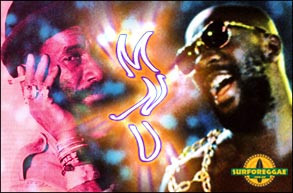
Movimento Negro Unificado!
We are almost at the end of 2009, a year that has so far generated many topics, discussions, controversies and “inovações” that are not so n
We are almost at the end of 2009, a year that has so far generated many topics, discussions, controversies and “inovações” that are not so new. In this column I intend to clarify and keep my comments sincere and objective. To start lighter, I'm going to talk about a genre that is growing every day, taking up more and more space on radio stations, dance floors, etc., and which mainly highlighted a wonderful partnership with Reggae. I'm talking about Hip-Hop.
The movement continues to rise, and it is interesting to note that it has reached an increasingly loyal audience. To prove this, just remember the Reggae bands that performed alongside a Rapper. There are several examples, but I don't want to mention the shows, the bands or the rappers here, but rather talk about how this partnership is valuable, old, with the same concepts and roots. Old? You might be wondering... But that's right!
Let's remember that the term "Hip-Hop" was established around 1968 by the black African Bambaataa, inspired by two cyclical movements. The first of these was the way in which the culture of North American ghettos was transmitted. The second was precisely the most popular form of dance at the time, that is, moving the hips (HIP) and jumping (HOP). It was an invitation to party, just like the beginning of Reggae on the radio.
At this time (1960s), a great discussion about human rights proliferated and, in this order of events, the marginalized of New York society came together to assert their proposals to eliminate their concerns and, just like reggae, it was music's turn to show political, social and economic power. This is how great black leaders emerged, such as Martin “Luther” King and Malcom X, and groups that fought for human rights with the “Panteras Negras”.
This environment greatly influenced the first practitioners of Hip-Hop, especially artists like the late Isaac Hayes (10-08-2008) who made the inhabitants of the ghettos dance to the songs they themselves called "Rap", like the "Ike’s Raps" contained in Hayes' LPs, composed of a danceable musical base accompanied by spoken rhymes that followed the rhythm. Furthermore, the message contained a high political-social content.
Looking back at the shows this year, or at least up until now, several reggae bands made rap loud. So I looked through some files and was surprised to read something from 15 years ago. In the 90s, Hip Hop was promoted in São Paulo by cultural organizations and workshops, with the immense participation of REGGAE musician Toninho Crespo. The work continued in the municipality of Diadema, with the professionalism of Sueli Chan (member of MNU - Movimento Negro Unificado). Regardless, it is clear that the union of rhythms is nothing new, but rather a mixture of solid origin and infinite validity that strengthens black culture and its ideals.
Category
#Reggae