
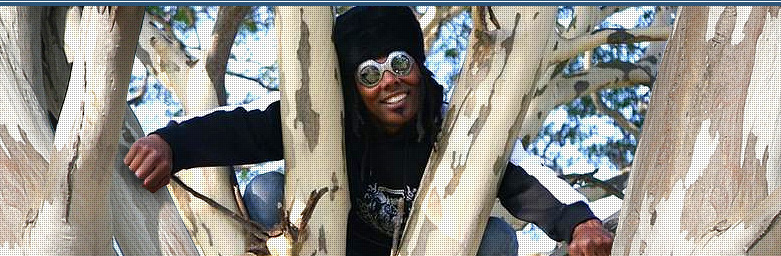
The journey of Dagô Miranda and his group, Radical Roots, could very well be compared to the parable of the sower in the Gospel According to Matthew. For those who never attended catechism classes, it tells of the sower who scattered his seeds upon the earth. Some were eaten by birds, others fell on rocky ground and withered for lack of good soil, and many were choked by thorns.
Finally, one fell on fertile ground and yielded good fruit. And many were the seeds sown in São Paulo in the early 1990s. It was the time when the city transformed itself into the capital of reggae, thanks to the efforts of three DJs and radio hosts. One of them was Otávio Rodrigues, who hosted Disco Reggae Night at Aeroanta. The other two were Jai Mahal and China Kane, who ran another reggae-dedicated dance hall for the Jamaican genre at Dama Xoc. Now extinct, the two venues sowed numerous reggae groups, many of them famous. Among them are the well-known Skank, Cidade Negra and Tribo de Jah, and Dagô, who releases his debut album after more than ten years of struggle.
Let's get straight to the point: Dagô Miranda is one of the most talented vocalists to emerge on the São Paulo reggae scene. He draws inspiration from the great voices of roots reggae, a genre that was never properly assimilated here (it has few but faithful followers, like Dagô and Tribo de Jah) and that Jamaica itself has forgotten how to make — to our sorrow, the island that gave birth to Bob Marley prefers insolent reggae men posing as rappers to stars of the old school. Dagô's register recalls Marley himself and the vocalizations of Jacob Miller, former singer of Inner Circle. This influence can be clearly perceived in gems of the caliber of Principal and Ser Feliz (Amor).
Radical Roots, in turn, is also a band of substance. They play that well-marked reggae, with drums echoing the rataplan in the right places and bass that snaps in your ears — steered by the noble Moisés Mota and Sérgio da Conceição. Both honed the Dreadlock repertoire in performances across Brazil's main capitals. That is what makes the album so flavorful.
It is well-seasoned roots reggae, but never aged. There are good tracks to dance to, such as the title song (whose horns remind us of the best moments of Steel Pulse, a British band of substance). Ana e a Lua features backing vocals echoing the I-Threes, that tribe of singers who accompanied the old Bob, and a beautiful dub moment. Mama Terra, Ser Feliz (Amor) and Orai, Vigiai (A Babilônia Vai Cair) bring a collaboration between the finest of São Paulo reggae and one of the leading authorities of São Luís chacundum.
Fauzi Beydoun is the composer of the first, co-author of the second alongside Dagô Miranda, and contributes his powerful voice on "Beato Salu Rastafari" on the third. The presence of singer Luciana Simões, from the group Mystical Roots, on Ser Feliz also deserves mention. To complete the picture, Dreadlock also features a dub — that crazy genre (or "structural solo", as musician Paulo Moura aptly put it) courtesy of DJ Apollo 9. Returning to the first paragraph, Dagô Miranda and Radical Roots are good seeds, cultivated in fertile soil. One can only hope the parable is confirmed, bears fruit, and that one becomes a hundred, another sixty, and another thirty.