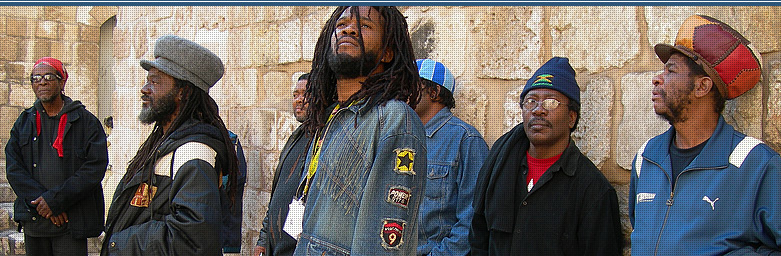
The dynamic combination of founding member Albert Griffiths, Clinton Fearon's linking vocals and harmonies, and singer Dallimore Sutherland made Gladiators one of the most important bands on the reggae scene. Over the past three decades, the group has continued to extend the Roots Reggae tradition. Since childhood, Albert Griffiths was fascinated listening to church music and learned his first guitar chords from an uncle. He gained more knowledge of the instrument by hanging out with local guitarists. They gave the young Albert short lessons, and in exchange he carried their instruments wherever they performed.
Coming to Kingston in 1960 to find work, all his efforts failed. Music was really the business, even though he was discouraged by the "nos" from local record labels. The turning point came when he finally got a job—not because of the work itself, but because there he met Leonard Dillon, who later gave shape to the Ethiopians. Convincing his employer to finance a recording session, Griffiths sent out the single "You Are The Girl". Released in 1966 under the name Al & The Ethiopians.
With striking beats and great sound quality, success spread further with the Ethiopians' biggest hit, "Train to Skaville". In 1967, Griffiths recruited David Webber and Errol Grandison, who later gave rise to The Gladiators. Their first single as a group, "The Train Is Coming Back", was a modest hit, even though the group recorded for Duke Reid and Lloyd Dale. They really surprised in 1968 with Coxsone Dodd producing "Hello Carol".
They continued recording for Dodd in the 70s, besides recording various singles for Lee Perry and Randy's Studio 17. Between 1974 and 1976, the group began a long association with Tony Robinson, who released their albums on the Groovemaster label in Jamaica and the Virgin label in the United Kingdom. In the early 80s, Gladiators signed with Nighthawk to record three albums: "Symbol Of Reality", "Serious Thing" and "Full Time", and an album "Dread Prophesy", recorded with the collaboration of Leonard Dillon.
The group recorded five albums in the late 80s and early 90s for Heartbeat. Gladiators experienced lineup changes in 1969 and 1973. Webber was replaced by Clinton Fearon in 1969 and Grandison by Dallimore Sutherland in 1973. In the mid-80s, Gladiators toured with Yabby You and the Ethiopians.
Due to health problems, Albert had to step away from Gladiators, making way for his son Al Griffiths. Al had already made occasional appearances while his father was still active, almost suggesting that his days as leader of one of the most important bands in reggae history were drawing to a close. Fortunately, Al Griffiths' entry on vocals was a pleasant surprise, for besides the physical resemblance, his voice is strikingly similar to his father's, adding even more magic to the performances.
Where the band plays the most
Pulled from the Surforeggae archive
- 01JUN 831
Montego Bay · JM