
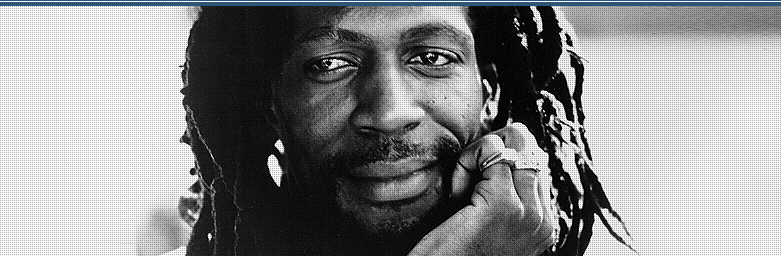
Gregory Isaacs was born on July 15, 1951, in the Fletcher's Land neighborhood of Kingston. From boyhood he worked hard, accumulating an extensive list of professions that included stints as a carpenter, horse handler, electrician and painter of panels and theater sets. According to his old friends, he was the first to have a car and to set up a record shop among the neighborhood youth. The neighborhood also housed some first-rate stars of the Jamaican show business, such as 'Mr. Rock Steady' Ken Boothe, the trio The Melodians and the melodious Slim Smith. Young Gregory attended all their rehearsals and also listened attentively to the voices of Sam Cooke and Brook Benton coming through the radio. It was from these influences that he forged his unique style, mixing Jamaican smoothness with soul music-inspired vocals.
In the early 70s he began his victorious solo career working with one of the big names of vinyl in Jamaica, Alvin Ranglin. But his search for independence led him to found his own recording label, African Museum, also the name of his shop and headquarters. This did not prevent him from recording with other outsiders of the musical scene, such as Lee Perry and Sly & Robbie. With them Gregory Isaacs made some of the masterpieces that consolidated his identification with the public (read more about Gregory's discography on the From RootsGregory to TecnoGregory page). His enormous popularity in the reggae homeland is only comparable to what he achieved in Brazilian lands, more precisely in Maranhão (1), where he performed alongside Tribo de JAH band in 91.
The complicated arrangement of love affairs is certainly the theme most explored by Gregory, highlighting the vast portion dedicated to the sorrows and small joys of solitude. But Jamaican reality and the strength of the Rasta message also have their place in songs like "The Border", "Mr. Cop" and "Opel Ride". The harshness of life on the streets is also not foreign to Gregory Isaacs: "When you live under certain conditions, anything can happen to you", he resigns himself. Assuming his Bezerra da Silva side, he confirms he has taken about fifty 'Opel rides', the brand of police cars on the island: "Almost always for driving without a license or possession of illegal herbs", he clarifies. At such times a small fine solves the problem, but in cases of carrying weapons things are more serious.
Jamaica's strict firearms laws have already put him in jail for a few months. But Gregory defends himself: "When they accuse you once for carrying a weapon and you are guilty, it is easy for them to accuse you again and again for it and even being innocent nobody believes. (...) I don't deal with crime". Gregory also says the police often provoke him and sometimes try to extort money. In prison he lived with all kinds of people, studied a lot and reviewed his life. He ended up transforming this experience into new reggae classics, such as "Days of Penitentiary", "Condemned" and many others.
Problems with the police and involvement with heavier drugs in the 80s gave rise to all kinds of rumors. Gregory then knew the worst side of popularity: "People in general love to speak ill of those they don't know and can't understand. They always believe the evil told to them and doubt the good. (...) As for drugs, they are the most devastating weapons. They were the biggest mistake I made".
This good that some doubt is, for example, in the way Gregory helps his community. Residents of the ghetto seek him out all the time with various requests: "Much of what I earn from my work serves to help all these people who need assistance. (...) That is why the greatest joy for me is the annual party we hold at the Maxfield Orphanage on January 7. My boys and other children from the community gather notebooks, pencils and materials and donate them. I have already donated a car and several wheelchairs. (...) If I am alive today it is because I try to do what is right". Gregory also fulfills his obligation to support the children he had with various women. His connection with the Jamaican man is total: "I represent the people. Making the people happy makes me happy", he concludes.
The man of a thousand faces who refuses to be boxed in by society seems to have matured. He continues to work feverishly, but without falling into the traps that his lifestyle often put in his path. Whether the seductive or solitary Gregory, whether the solidarity or rogue Gregory, whether the ant or the grasshopper, he will always be remembered as one of the great responsible for the excellence of Jamaican musical art.
Where the band plays the most
Pulled from the Surforeggae archive
- 01JUN 831
Montego Bay · JM