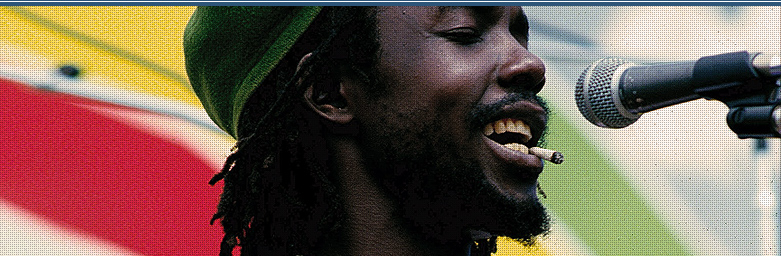
Named Winston Hubert McIntosh and born in Westmoreland (October 19, 1944), he grew up in Kingston, Jamaica, in the Trenchtown slum. Although his short temper frequently got him into trouble, the young McIntosh began singing and playing guitar at an early age, inspired by the American stations he could tune in on his radio. In the early 1960s he met Bob Marley and Bunny Livingston, forming the group Wailing Wailers. After Marley returned from the United States in 1966, the three became involved with the Rastafari religion, changing the band's name to The Wailers.
They secured a contract with Island Records, releasing Catch a Fire in 1972 and Burnin' in 1973. That same year, Tosh was involved in a serious car accident. His car fell off a bridge, killing his girlfriend and leaving Tosh with a severe skull fracture. He survived, but became an even more difficult person to deal with. After Island president Chris Blackwell refused to release his solo album in 1974, Tosh and Bunny left the Wailers, citing the unfair treatment they received from Blackwell, whom Tosh called "worse than the whites".
He released his solo album in 1976 on CBS, Legalize It; the title track soon became the anthem of the pro-marijuana movement, as well as a favorite at Tosh's shows, and also became the island's best-selling single, despite being banned from radio airplay. Always showing his militant side, he released Equal Rights in 1977, trying to gain recognition from the masses while maintaining his militant viewpoint, but it was not very successful, especially when compared to Bob Marley.
In the late 70s he released the albums Bush Doctor and Mystic Man and in 1981 released Wanted Dread And Alive, albums that were not widely acclaimed by the public. After the release of Mama Africa in 1983 (which includes his biggest hit, the cover of the classic song by American rocker Chuck Berry, Johnny B. Goode) he entered a self-imposed exile, seeking spiritual help from African healers while trying to get out of a distribution contract for his records in South Africa.
In 1987, Peter Tosh's career seemed to be making a comeback; that year, he received a Grammy for Best Reggae Performance for the album No Nuclear War. However, on September 11, a gang of three men broke into his home demanding money. When Tosh refused, they shot him and his friend, DJ Jeff "Free I" Dixon. The gang leader was Dennis "Leppo" Lobban, a man Peter Tosh had befriended and even helped find a job after serving a long prison sentence. Leppo turned himself in to the authorities, was tried and convicted in the shortest jury deliberation in Jamaican history: eleven minutes. He was sentenced to death, but his sentence was commuted to life imprisonment in 1995 and he remains in prison to this day. Neither of his two alleged accomplices were found, although there are rumors that both were murdered.