
Reggae · October 17, 2013
Who is Jah?
The name Jah is widely used in Reggae, not only in song lyrics but also in the names of songs like “Will Be Forever Loving Jah” by Bob Marle
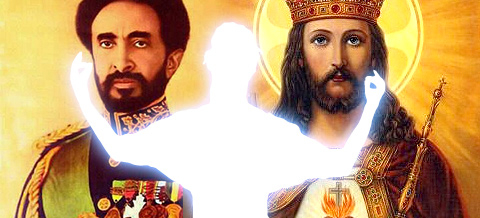
The name Jah is widely used in Reggae, not only in song lyrics but also in the names of songs like “Will Be Forever Loving Jah” by Bob Marley, and even in the names of Brazilian bands like Tribo de Jah, Jah Live, Jahcarreggae, Jah I Ras, etc., and other international bands and artists like S.O.J.A (Soldiers of “Jah” Army), Jah Shaka, Jah Cure, Jah Servant, I JAH MAN, among others. But the question that remains is: After all, who is JAH? Do we really know him?
 We also have the word we know in Portuguese as Hallelujah (which means God be praised). In English, we can find in the Darby, John Nelson (Ed.1890), and also in the well-known King James version, the Hebrew word Hallelujah, for the same meaning, "God be Praised". But are we talking about the same God? Is this the God that reggae musicians speak of in their songs? The answer is YES.
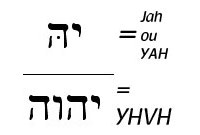 (Tetragram YHWH)
What happened is that very few people had access to the Bible, as at that time the people were uneducated, many could not read or write, and only the Catholic Church held power over the biblical message, which led to the distortion of the word and the implementation of doctrines of men, including the charging for the salvation of people, known as indulgences, a way of “pay your sins with your wealth and secure your place in heaven,” which was actually something completely anti-biblical. If the people could read, they would know that God wants our hearts and not our possessions, after all, He is the owner of gold and silver.
(Tetragram YHWH)
What happened is that very few people had access to the Bible, as at that time the people were uneducated, many could not read or write, and only the Catholic Church held power over the biblical message, which led to the distortion of the word and the implementation of doctrines of men, including the charging for the salvation of people, known as indulgences, a way of “pay your sins with your wealth and secure your place in heaven,” which was actually something completely anti-biblical. If the people could read, they would know that God wants our hearts and not our possessions, after all, He is the owner of gold and silver.
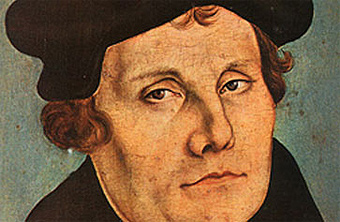 Thanks to “JAH”, in 1517 in Germany, a Protestant emerged for the people, the professor and then Catholic monk, Martin Luther. He nailed 95 theses criticizing the actions of the Pope and the high clergy to the door of the Wittenberg Cathedral. Even with the church's intervention, the theses spread rapidly. In 1520, Luther was excommunicated by the Pope and burned the letter of excommunication in public, breaking completely with Catholicism.
One of Martin Luther's main concerns was that all people could read the biblical teachings and thus draw their own conclusions, and not believe in the human doctrines created by the Catholic Church, which exploited the ignorance of the people. As he was a learned man, he translated the Bible into his language, German, and years later the word of God gained translations in English, French, and Spanish, and people could then read the Bible and have the freedom to interpret it.
From that time on, the Catholic Church was never able to exercise its power in Europe again, and Martin Luther came to be called the father of Protestantism. From him came the Lutheran and Evangelical Christian Churches that we know today. Phew! If you made it this far, you must be wondering, what does this have to do with music? It does, and a lot.
Thanks to “JAH”, in 1517 in Germany, a Protestant emerged for the people, the professor and then Catholic monk, Martin Luther. He nailed 95 theses criticizing the actions of the Pope and the high clergy to the door of the Wittenberg Cathedral. Even with the church's intervention, the theses spread rapidly. In 1520, Luther was excommunicated by the Pope and burned the letter of excommunication in public, breaking completely with Catholicism.
One of Martin Luther's main concerns was that all people could read the biblical teachings and thus draw their own conclusions, and not believe in the human doctrines created by the Catholic Church, which exploited the ignorance of the people. As he was a learned man, he translated the Bible into his language, German, and years later the word of God gained translations in English, French, and Spanish, and people could then read the Bible and have the freedom to interpret it.
From that time on, the Catholic Church was never able to exercise its power in Europe again, and Martin Luther came to be called the father of Protestantism. From him came the Lutheran and Evangelical Christian Churches that we know today. Phew! If you made it this far, you must be wondering, what does this have to do with music? It does, and a lot.
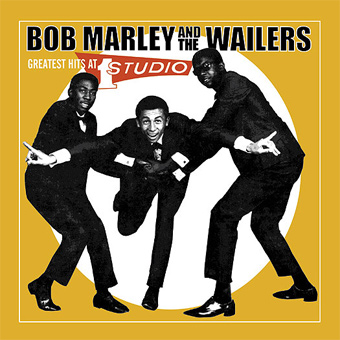 (Bunny Wailer, Bob Marley, and Peter Tosh)
Well, the conclusion of this story is: Jah is close to us and present in reggae music, but is His message within us? In this crazy world, our actions will tell. Drugs and alcohol do not match the message of Jah, with the biblical teachings. Make a difference, get closer to Him, read the Bible, and draw your conclusions. And here’s a tip, start with the New Testament, as the language is easier. Safe travels!
(Bunny Wailer, Bob Marley, and Peter Tosh)
Well, the conclusion of this story is: Jah is close to us and present in reggae music, but is His message within us? In this crazy world, our actions will tell. Drugs and alcohol do not match the message of Jah, with the biblical teachings. Make a difference, get closer to Him, read the Bible, and draw your conclusions. And here’s a tip, start with the New Testament, as the language is easier. Safe travels!
JAH IN THE BIBLE
What few may know is that JAH is closer to us than we can imagine. You must have a Bible at home, right? Well, if you have a Bible in the Almeida Revised and Corrected version in Brazil, you can find in Psalm 68, verse 4, the following words: “Sing to God, sing praises to His name, praise Him who rides on the heavens, for His name is Jah, rejoice before Him.”, or if it is in the version of the Pontifical Biblical Institute, the same passage literally brings the word JAH, "for His name is JAH". This passage can be heard in the song "Grilhões" by the old and excellent band from Minas Gerais, Rasta Joint (download). This version of the Bible is not very common; in most, the word Lord, or Yahweh, or Jehovah is written. In the English translation, the word Jehovah appears throughout the Bible as JEHOVA, and is affectionately abbreviated to "JAH".
ONE GOD
JAH, Yahweh, Jehovah, Yah, are just translations for the same God, the God of Abraham, Isaac, and Jacob mentioned in the Bible (Genesis 50:24). The difference is that Jews believe only in the first 5 books (Torah) and a few other books of the Old Testament, and they believe that the Messiah (JAH) has not yet come for the redemption of their people. Christians believe in the message of the entire Bible, in Jesus (JAH) as the only Lord and Savior, who has come to earth and died for the remission of our sins, and they also believe in the Trinity, Father, Son, and Holy Spirit. Rastas, in addition to this, believe in the revelation of Selassie (JAH), in the figure of Haile Selassie, whom they began to call Jah Rastafari, who was the regent of Ethiopia from 1916 to 1930 and emperor of the country from 1930 to 1974. Over time, some words from the Bible have gained different translations and abbreviations. Let's explain better. How about a little history just to set the scene?HISTORICAL REFERENCES
The Old Testament of the Bible was originally written in Hebrew (the language of the Jewish people, of Israel) in the Old Testament. JAH or Yah (Hebrew) is a poetic abbreviated form of the Tetragram YHWH (photo below), the name attributed to God. The New Testament was originally written in Greek. After a while, the Bible was translated entirely into Greek, then into Latin, the language of the Roman Empire and the Catholic Church.
(Tetragram YHWH)
MARTIN LUTHER
FROM RELIGION TO REGGAE
The mentioned relationships have a strong connection with music, especially with reggae, which is the “grandchild” of Ska and Rocksteady, styles that emerged from a mix of local rhythms from Jamaica, such as Mento, and Rhythm Blues, which also had their origins in the Gospel music of American churches. In the late 1950s, a time when Jamaica was a rural country with a predominantly Protestant Christian population, black American rhythms were widely disseminated there. Thus, Reggae music began to be influenced by the message of the gospel even before the first rastas. For example, the song "Shadrach, Meshach & Abednego" by Justin Hinds and the Dominoes (later gained a beautiful version for "Abendigo" with Abyssinians), cites the biblical story found in the book of Daniel, starting from chapter 1, verse 7, which speaks of 3 young Hebrews (Jews) who refused to bow down to the gods of Babylon, of the then emperor, Nebuchadnezzar. For this affront, they were thrown into a burning furnace, but they were not burned because "JAH" delivered them. A truly interesting story that is worth reading; it is only 3 chapters long.
(Abyssinians with "Abendigo")
Even at that time, other songs like “The Rivers of Babylon” by Brent Dowe and The Melodians from 1972, which later became world-famous in the film “The Harder They Come” starring Jimmy Cliff, was based on Psalm 137, a hymn that expresses the lament of the Jewish people in Babylonian exile. The rivers of Babylon referred to in the song are the Euphrates River and the Tigris River. This song also contains literal fragments from Psalm 19:14.
Even the Wailers had songs well inspired by the Bible, even before the tone of their messages became rasta starting in 1967, as can be seen on the cover of this record from the legendary Studio One, where none of the three Wailers (Bob, Peter, and Bunny) even had dreads, nor did they look like rudeboys (photo below). They include, for example: "Amen" (1964 - Amen - Simmer Down At Studio One), and "Wings of Dove" (1966 - Wings Of A Dove - Climb The Ladder - Studio One). This shows that the message of Jah has always been present in the music of the island, from mento to Ska, through Rocksteady to Reggae.
(Bunny Wailer, Bob Marley, and Peter Tosh)
Category
#Reggae