
Reggae · November 20, 2018
Black Awareness Day: the hero Zumbi!
Black Awareness Day is, according to law 10,639 of 2003, a national day of awareness. But few remember to reflect, even for a few moments on
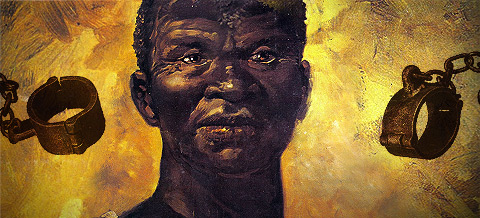
Black Awareness Day is, according to law 10,639 of 2003, a national day of awareness. But few remember to reflect, even for a few moments on this day. On a distant November 20, 1695, 323 years ago, Zumbi, leader of Quilombo dos Palmares, the largest quilombo of the colonial period, died. Quilombo was a type of community formed by fugitive slaves from farms, prisons and slave quarters. There were not only blacks, but also poor whites, mestizos and Indians.
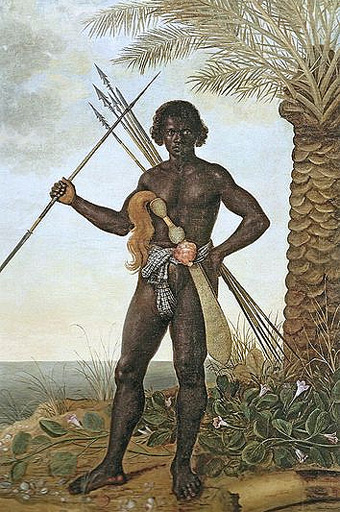 (Representation of leader Ganga Zumba)
Quilombo dos Palmares, in 1678, was a community of approximately 30 thousand people led by a black man known as Ganga Zumba. He accepted a peace proposal from the governor of the Captaincy of Pernambuco, which consisted of granting freedom to all escaped slaves living in Quilombo, but this in exchange for the community submitting to the authority of the Portuguese Crown.
Disagreeing with Ganga Zumba's acceptance, Zumbi, in addition to rejecting the peace proposal, also challenged him, and promised to continue the resistance against Portuguese oppression for an indefinite period of time. Zumbi thus became the leader of Quilombo dos Palmares.
A São Paulo bandeirante named Domingos Jorge Velho was called to organize an invasion of the quilombo. On February 6, 1694, Palmares was destroyed by a legion of more than 9,000 men, but Zumbi - despite being injured - survived. He probably fled to his stronghold, Serra Dois Irmãos, but was betrayed by Antônio Soares who gave away his location.
Zumbi was found, and his body was pierced by bullets and stab wounds, and was later taken to Porto Calvo. His head was cut off and sent to Recife covered in fine salt and stuck on a pole in a public square until it was consumed by time. The act was to show the slaves that Zumbi was not immortal as many believed.
(Representation of leader Ganga Zumba)
Quilombo dos Palmares, in 1678, was a community of approximately 30 thousand people led by a black man known as Ganga Zumba. He accepted a peace proposal from the governor of the Captaincy of Pernambuco, which consisted of granting freedom to all escaped slaves living in Quilombo, but this in exchange for the community submitting to the authority of the Portuguese Crown.
Disagreeing with Ganga Zumba's acceptance, Zumbi, in addition to rejecting the peace proposal, also challenged him, and promised to continue the resistance against Portuguese oppression for an indefinite period of time. Zumbi thus became the leader of Quilombo dos Palmares.
A São Paulo bandeirante named Domingos Jorge Velho was called to organize an invasion of the quilombo. On February 6, 1694, Palmares was destroyed by a legion of more than 9,000 men, but Zumbi - despite being injured - survived. He probably fled to his stronghold, Serra Dois Irmãos, but was betrayed by Antônio Soares who gave away his location.
Zumbi was found, and his body was pierced by bullets and stab wounds, and was later taken to Porto Calvo. His head was cut off and sent to Recife covered in fine salt and stuck on a pole in a public square until it was consumed by time. The act was to show the slaves that Zumbi was not immortal as many believed.
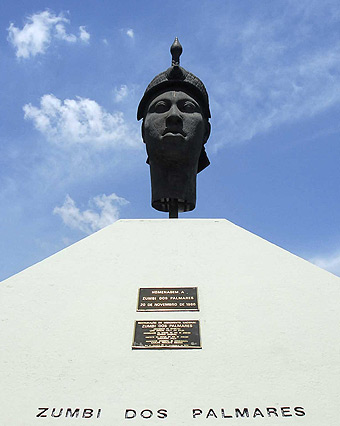 (Monument with the head of the hero Zumbi - RJ)
Quilombo dos Palmares was defended by Zumbi for years against several military expeditions, all with the aim of re-enslaving the local fugitives. However, Quilombo had a curious fact.
(Monument with the head of the hero Zumbi - RJ)
Quilombo dos Palmares was defended by Zumbi for years against several military expeditions, all with the aim of re-enslaving the local fugitives. However, Quilombo had a curious fact.
 Free yourself from mental slavery..." - said Bob Marley. Only culture and conscience can make man truly free.
ZUMBI LEADERSHIP
(Representation of leader Ganga Zumba)
BETRAYAL AND DEATH
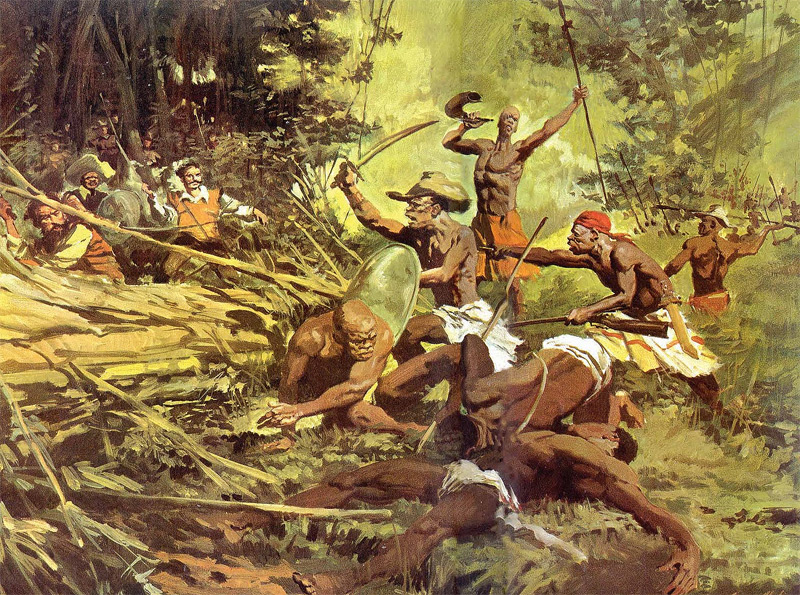 (Representation of the battle in Quilombo)
(Monument with the head of the hero Zumbi - RJ)
FREEDOM AND SLAVERY: THE QUILOMBO
Despite fleeing slavery, many people from Quilombo were slaves within the community, but what Zumbi practiced was different. Some people thought that because they were free they would no longer need to work, but Zumbi wanted to show that in his vision of community, everyone had roles and a lot of work to keep the quilombo self-sufficient. Zumbi fought until the end of his life so that poor people (black or white) would have the dignity of work and a sense of commitment to the quilombo, the only safe place against the evil slavery regime. Reflecting on today, work, in addition to dignifying man, provides sustenance for himself and his family, and must be faced with pride and commitment. Anyone who lives in Babylon today knows what it is like to be a slave. When you are forced to face poor quality public transport, a failing healthcare system, and other problems inherent to poverty, you experience a bit of this slavery, but with one particularity: It's up to you to get out of it.Free yourself from mental slavery..." - said Bob Marley. Only culture and conscience can make man truly free.Category
#Reggae