
Reggae · November 19, 2003
The 12 Tribes of Israel!

BIBLICAL PERIOD
The Hebrew Bible - which, with the exception of some books, essentially coincides with the Christian Old Testament -- recounts the fundamental facts of the history of the Jewish people, from the transcendental moment of their election and covenant with God. The Jews divide their Bible into three parts: the Law (Torah), the Prophets (Neviim) and the Hagiographa (Ketuvim). Covenant and election. The patriarch of the Hebrews, Abraham, lived in the city of Ur, in Chaldea, near the mouth of the Euphrates, in the twentieth century before the Christian era. From there, he set out to the north with his father, and received the command of God: "Leave your country, your kin and your father's house, for the country that I will show you. I will make of you a great people, I will bless you, I will make your name great; be a blessing!" (Gn 12:1-2). After Abraham's arrival in the land of Canaan (more recently known as Palestine, for the Jews the Land of Israel, and where today the State of Israel and Jordan are located), Yahweh established a covenant with him: "To your posterity I will give this land, from the river of Egypt to the great river, the river Euphrates" (Gn 15:18). And he added: "I will greatly multiply your descendants, so that they cannot be counted" (Gn 16:10). As a sign of this covenant he ordered him: "That all your males be circumcised" (Gn 17:10). Abraham, his son Isaac and his grandson Jacob constitute the patriarchal line of reference of the Jewish people, faithful to the divine covenant. Jacob received from the Lord a new name, Israel, and from his 12 sons originated the 12 tribes of the Jewish people, the descendants of Israel, or, as they were called, the "children of Israel" (Bene Israel).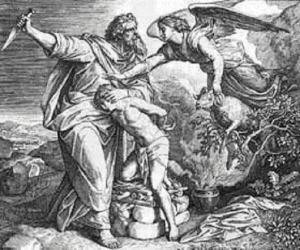 Patriarch Abraham

 Elizur (tribe of Reuben)
Shelumiel (tribe of Simeon)
Nahshon (tribe of Judah)
Nethanel (tribe of Issachar)
Eliab (tribe of Zebulun)
Elishama (tribe of Ephraim, son of Joseph)
Gamaliel (tribe of Manasseh, son of Joseph)
Abidan (tribe of Benjamin)
Ahiezer (tribe of Dan), Pagiel (tribe of Asher)
Eliasaph (tribe of Gad)
Ahira (tribe of Naphtali)
Exile and restoration. At the beginning of the 6th century B.C., the Babylonian king Nebuchadnezzar destroyed the temple, plundered Jerusalem and deported its population to Babylon. This new spiritual exile united the "remnant of Israel" under the preaching of the prophet Ezekiel, initiating a religious restoration that prepared another, of a political character.
The conquest of Babylon by Cyrus, king of the Medes and Persians, allowed the Hebrews to return to the Promised Land, in 538 B.C., and rebuild the temple of Jerusalem, in 515 B.C. A large part of the people, however, remained scattered from Egypt to India, as a prefiguration of the later diaspora (dispersion). This religious and political restoration is considered by some authors as the true origin of the spiritual unity of the Jewish people.
Its great architect was Ezra, priest of the Jews of Babylon, who was sent by the Persian king Artaxerxes II to Jerusalem to control observance of the Mosaic law, recognized, in its civil character, for the Jews. Ezra renewed the covenant with Yahweh by reading the law to the people for seven days (and, constantly, twice a week).
Also he renewed worship in the new temple, although teaching continued in local synagogues, and he encouraged the hope, preached by the prophets, in the coming of a messiah who would establish the kingdom of God. Greetings and Love!
Elizur (tribe of Reuben)
Shelumiel (tribe of Simeon)
Nahshon (tribe of Judah)
Nethanel (tribe of Issachar)
Eliab (tribe of Zebulun)
Elishama (tribe of Ephraim, son of Joseph)
Gamaliel (tribe of Manasseh, son of Joseph)
Abidan (tribe of Benjamin)
Ahiezer (tribe of Dan), Pagiel (tribe of Asher)
Eliasaph (tribe of Gad)
Ahira (tribe of Naphtali)
Exile and restoration. At the beginning of the 6th century B.C., the Babylonian king Nebuchadnezzar destroyed the temple, plundered Jerusalem and deported its population to Babylon. This new spiritual exile united the "remnant of Israel" under the preaching of the prophet Ezekiel, initiating a religious restoration that prepared another, of a political character.
The conquest of Babylon by Cyrus, king of the Medes and Persians, allowed the Hebrews to return to the Promised Land, in 538 B.C., and rebuild the temple of Jerusalem, in 515 B.C. A large part of the people, however, remained scattered from Egypt to India, as a prefiguration of the later diaspora (dispersion). This religious and political restoration is considered by some authors as the true origin of the spiritual unity of the Jewish people.
Its great architect was Ezra, priest of the Jews of Babylon, who was sent by the Persian king Artaxerxes II to Jerusalem to control observance of the Mosaic law, recognized, in its civil character, for the Jews. Ezra renewed the covenant with Yahweh by reading the law to the people for seven days (and, constantly, twice a week).
Also he renewed worship in the new temple, although teaching continued in local synagogues, and he encouraged the hope, preached by the prophets, in the coming of a messiah who would establish the kingdom of God. Greetings and Love!Category
#Reggae