
Reggae · February 01, 2013
We want something new! An analysis of the reggae market in Brazil!
It is undeniable that things are moving a little slower for reggae than for other musical styles with greater commercial appeal. But could i

It is undeniable that things are moving a little slower for reggae than for other musical styles with greater commercial appeal. But could it be that a certain discrimination of the rhythm by society, the lack of support and the consequent financial difficulties and the “turning a blind eye” of the mainstream media to what is happening, are the biggest factors responsible for the lack of news in the national and international market?
It would not be committing a crime to say that in recent years, both in the national and international markets, there have been few new developments that have appeared and emerged, reaching a larger audience than that restricted to small local events. In Brazil, while big bands that had been at their peak for a long time like Cidade Negra and Tribo de Jah disappeared, there were few who emerged and managed to break the barriers of their own state.
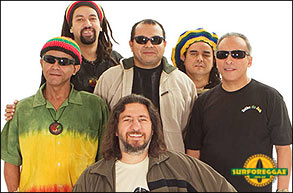 (The great Tribo de Jah, one of the national highlights for a long time)
 EVENTS: As there have not been many new developments that attract the public, perhaps this is one of the reasons that generate a certain "sameness" in the artistic schedules of major events. However, giving emerging bands the opportunity to showcase their work even at earlier times should be an example to be followed more often.
PUBLIC: The public has its share of the blame when they do not attend and support local band events. It's common to hear people say that they only go to local reggae band shows when they get freebies (and the price is already quite affordable). Perhaps this is one of the biggest problems, as local bands are unable to form a loyal audience and thus show strength to be invited and hired by major events, receiving a real fee, and not just transportation assistance as often happens.
BANDS: Finally, bands are also partly to blame for not looking for ways and methods to expand their relationship with potential fans, even though nowadays there are several low-cost forms of promotion such as the internet itself, which is often misused.
EVENTS: As there have not been many new developments that attract the public, perhaps this is one of the reasons that generate a certain "sameness" in the artistic schedules of major events. However, giving emerging bands the opportunity to showcase their work even at earlier times should be an example to be followed more often.
PUBLIC: The public has its share of the blame when they do not attend and support local band events. It's common to hear people say that they only go to local reggae band shows when they get freebies (and the price is already quite affordable). Perhaps this is one of the biggest problems, as local bands are unable to form a loyal audience and thus show strength to be invited and hired by major events, receiving a real fee, and not just transportation assistance as often happens.
BANDS: Finally, bands are also partly to blame for not looking for ways and methods to expand their relationship with potential fans, even though nowadays there are several low-cost forms of promotion such as the internet itself, which is often misused.
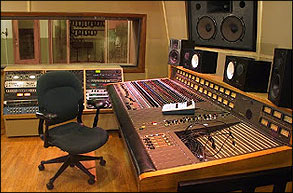 The professionalization of bands and the formation of solid promotion teams are mandatory nowadays when the competition for a space, not only in the reggae market, is increasingly fierce, and this is due to the ease of launching a musical work. A computer, editing software, reasonable microphones and that's it! An artist is born! But often, unfortunately, without preparation, without polish and most seriously... without talent!
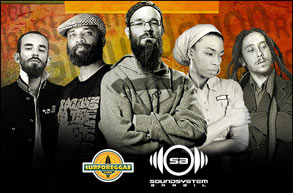 (Some of the big names released by the Surforeggae & SSB label)
This market has grown surprisingly, as has people's awareness not to buy pirated CDs or simply download them illegally from the internet. Despite these advances that are just beginning, the market for international bands in Brazil is also seen as "a complicated case", because as there is not a large turnover of artists, as the vast majority of releases fail to reach the final public, the market is dominated by a restricted set of attractions.
Obviously it is beneficial for reggae that great artists like Israel Vibration, Groundation, Dezarie or Midnite come to South America two or three times a year – the problem begins to exist when no other shows take place, and so the “lines” of international artists end up repeating themselves in the same way as the national ones.
The reality is that, in this case, the problem is even more complicated. It is not viable to bring international bands to perform just 1 or 2 shows given the costs of air tickets, visas, among other essential expenses. So how can we ensure that new products come to the country and make presentations in different states, making the process viable?
(Some of the big names released by the Surforeggae & SSB label)
This market has grown surprisingly, as has people's awareness not to buy pirated CDs or simply download them illegally from the internet. Despite these advances that are just beginning, the market for international bands in Brazil is also seen as "a complicated case", because as there is not a large turnover of artists, as the vast majority of releases fail to reach the final public, the market is dominated by a restricted set of attractions.
Obviously it is beneficial for reggae that great artists like Israel Vibration, Groundation, Dezarie or Midnite come to South America two or three times a year – the problem begins to exist when no other shows take place, and so the “lines” of international artists end up repeating themselves in the same way as the national ones.
The reality is that, in this case, the problem is even more complicated. It is not viable to bring international bands to perform just 1 or 2 shows given the costs of air tickets, visas, among other essential expenses. So how can we ensure that new products come to the country and make presentations in different states, making the process viable?
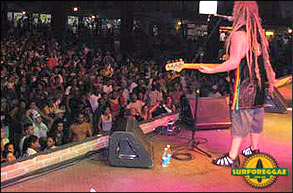 (One of SOJA's first shows in Brazil in 2007)
However, this formula requires a certain amount of time (around 2 years or more) and a large investment on the part of the people who carry out these shows. But then you ask yourself: "If everyone is to blame, then how can we make the market more diverse and attractive?"
Although difficult to execute, the answer is simple: participation and interest! Two words that currently don't go together. When we have interesting events, the public does not participate. Or at another time he even participates, but in events where the attraction, or simply the type of format, are not interesting. Finding this balance is the key to the problem, even if the current scenario does not arouse such "INTEREST".
In the meantime, we hope that each reader will question themselves and think about what can be done so that the problems reported here are at least reduced. There is a lot of art and artists out there... and also a lot of people thirsty for good news. May Jah know how to combine these two elements for the health of our much-loved reggae music.
(One of SOJA's first shows in Brazil in 2007)
However, this formula requires a certain amount of time (around 2 years or more) and a large investment on the part of the people who carry out these shows. But then you ask yourself: "If everyone is to blame, then how can we make the market more diverse and attractive?"
Although difficult to execute, the answer is simple: participation and interest! Two words that currently don't go together. When we have interesting events, the public does not participate. Or at another time he even participates, but in events where the attraction, or simply the type of format, are not interesting. Finding this balance is the key to the problem, even if the current scenario does not arouse such "INTEREST".
In the meantime, we hope that each reader will question themselves and think about what can be done so that the problems reported here are at least reduced. There is a lot of art and artists out there... and also a lot of people thirsty for good news. May Jah know how to combine these two elements for the health of our much-loved reggae music.
(The great Tribo de Jah, one of the national highlights for a long time)
REGGAE NATIONAL: ARE WE IN CRISIS?
If we analyze carefully, there are so few national bands today that tour the country frequently that you can count them on one hand. This is so notorious that groups like Ponto de Equilíbrio, Mato Seco, Natiruts and Planta e Raiz are practically guaranteed to be present, sometimes even simultaneously, at all major events across the country. Without discussing the quality or artistic appeal of each of these examples or others not mentioned, the fact is that in the last 5 or 10 years not only are the renowned attractions the same, but local bands also end up repeating themselves precisely because they are the only ones able to gather a larger audience. Basically, there are three sides to this drama – the public, the event and the rising bands. But... is there only one person to blame?WHO IS THE FAULT?
Trying to understand from the side of event producers, a dilemma arises. When risking large sums to put on shows, they need a certain guarantee of ticket sales to continue their work and avoid losses.
PROFESSIONALIZING
GRINGOS: FROM THE RISE TO THE DECLINE
The first shows by foreign reggae artists in Brazil began to take place at the end of the 60s, and took shape from the 80s onwards, when rock artists and Brazilian popular music themselves became very close to Jamaican reggae. Names like Titâs, Gilberto Gil, Paralamas do Sucesso, Itamar Assumpção and Luiz Melodia were some of the ones that started the rhythm taking root in the country, making reggae the hottest rhythm of the 90s. In the midst of this effervescence, not only people were won over, but also big sponsors and the big media, both in Brazil and abroad, and obviously this "phenomenon" generated a large turnover of names.
(Inner Circle and the explosive "Sweat")
In no order of relevance, names like Jimmy Cliff, Ziggy Marley & The Melody Makers, Inner Circle, Black Uhuru, Israel Vibration, Pato Banton, The Wailers, Alpha Blondy, Joe Higgs, Maxi Priest, Big Mountain, Papa Winnie, Dennis Brown, Gregory Isaacs, Culture, The Gladiators, Burning Spear, The Mighty Diamonds, Lucky Dube and many others, were a guaranteed presence regardless of the station, and almost always performing to large audiences numerous.
However, this era ended not only accompanied by the bankruptcy of the recording industry in the country, but also by the illness or death of many of these legendary artists. Of those that remained, few resisted market saturation and especially the modernization of the sector in the early 2000s.
IS THE REGGAE READY FOR THE NEW ERA?
Nowadays, practically the only way to find out about new artists, or the most recent works of great legends, is the internet – given the lack of distribution of records in the country caused by the bankruptcy of the traditional recording industry, which died “embraced” by piracy. Regulated digital distribution is one of the great hopes for the market to warm up again, and for people to have more easy access to records by their favorite artists (new or old). One of the vehicles fighting for this strengthening is Surforeggae itself, which together with the Sound System Brazil label, is investing and launching some artists in the country's main digital download stores, and also in cell phone operators. (read news).
(Some of the big names released by the Surforeggae & SSB label)
PARTICIPATION AND INTEREST
Lately the only formula has been “exposure”, either directly showing the group's work for the first time at major events so that people can get to know it and, if possible, assimilate the sound, or even carrying out prior and detailed publicity work. In addition to traditionally using communication channels such as radio, social networks currently play a fundamental role in this process, as with enormous speed and versatility, it is possible to reach more and more people. Names like SOJA, Groundation and Midnite came to Brazil at first, still little known, and today they are an undisputed reality in the market.
(One of SOJA's first shows in Brazil in 2007)
Category
#Reggae