
Reggae · December 12, 2012
Ras Cultura Special. Introduction.

 Journalism: Lígia Cabús
Bibliographic Consultancy: Ras Neilton
The Rastafari movement or Rastafarianism was born from the conjunction of social, political, economic and cultural factors. These were events that marked a time of great changes in the consciousness of people around the world. In the first half of the 20th century, the 1900s, humanity seemed to be collectively experiencing a process of review and proof of true evolution. Great achievements were celebrated, such as technological advances; on the other hand, monumental mistakes were made; a paradox because, at that same moment, voices from all over the world made their protests heard demanding reparation for the great wounds opened by the arbitrariness of countless generations of the past.
In this context, the most vehement cries came from the African continent, completely exhausted and chaotic as a result of the abuses committed by European colonization. In África, black movements emerged seeking to rescue ethnic and cultural self-esteem and Rastafarianism appeared as an ideological meeting point that offered strong symbols representing identity values.
The philosophical-religious origin of the Rastafarian doctrine is double from a historical and geographical point of view. Around the 1930s, in two distant places, the same spirit of renewal was rising. Political-cultural mobilizations that shook Etiópia had a notable repercussion on Jamaica. At that time, Etiópia was a theocratic monarchy governed by the mythical dynasty of descendants of the biblical king Salomão, the result of his union with the no less legendary queen of Sabá (or Sheba). This one governed a vast region to the south of that country. These heirs maintained the lineage and the throne over millennia and on November 2, 1930, at the age of 38, Ras Tafari Makonnen was crowned as the new ruler of the Ethiopian empire.
Journalism: Lígia Cabús
Bibliographic Consultancy: Ras Neilton
The Rastafari movement or Rastafarianism was born from the conjunction of social, political, economic and cultural factors. These were events that marked a time of great changes in the consciousness of people around the world. In the first half of the 20th century, the 1900s, humanity seemed to be collectively experiencing a process of review and proof of true evolution. Great achievements were celebrated, such as technological advances; on the other hand, monumental mistakes were made; a paradox because, at that same moment, voices from all over the world made their protests heard demanding reparation for the great wounds opened by the arbitrariness of countless generations of the past.
In this context, the most vehement cries came from the African continent, completely exhausted and chaotic as a result of the abuses committed by European colonization. In África, black movements emerged seeking to rescue ethnic and cultural self-esteem and Rastafarianism appeared as an ideological meeting point that offered strong symbols representing identity values.
The philosophical-religious origin of the Rastafarian doctrine is double from a historical and geographical point of view. Around the 1930s, in two distant places, the same spirit of renewal was rising. Political-cultural mobilizations that shook Etiópia had a notable repercussion on Jamaica. At that time, Etiópia was a theocratic monarchy governed by the mythical dynasty of descendants of the biblical king Salomão, the result of his union with the no less legendary queen of Sabá (or Sheba). This one governed a vast region to the south of that country. These heirs maintained the lineage and the throne over millennia and on November 2, 1930, at the age of 38, Ras Tafari Makonnen was crowned as the new ruler of the Ethiopian empire.
MARCUS GARVEY
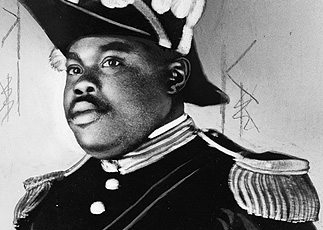 (The Leader Marcus Garvey)
THE BLACK MESSIAH
The figure and story of Haile Selassie are at the basis of Christian-Rastafarian theology. In Etiópia, the heir to the throne of Davi tempts them, among other titles, those of King of Kings and Lord of Lords. Due to his enormous charisma and strong leadership in favor of oppressed nations and ethnicities throughout the world, Selassie began to be considered as "Cristo", in its original meaning, Chrestos, that is, anointed, the Son of God, reincarnation of Jesus de Nazaré himself.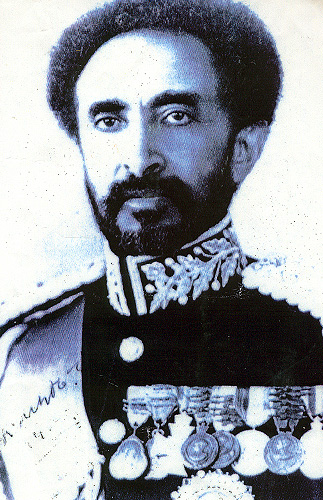 (Prince Ras Tafari Makonnen)
SOLOMON'S DYNASTY IN AFRICA
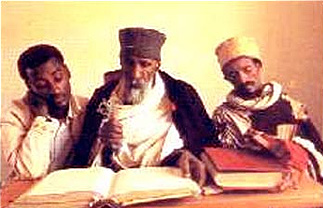
In Kebra Nagast, it is said that King Davi, the first Jewish ruler of the so-called Period of Kings in Jewish history, married Bathsheba, a descendant of black Jews. The couple produced the historic Salomão, who succeeded his father and fathered a son with Queen Sheba (the Queen of Sabá), empress of lands south of Ethiopia. As a legacy to the heir, Salomão entrusted the Queen with a diamond ring decorated with the figure of Leão de Judah. The boy was called Menelik, Bayna-Lehkem or, the "Son of the Wise", and it is said that he visited the lands of Israel where he met his father and with him was initiated into Judaism. This is how the Kingdom of Davi was established in Etiópia three thousand years ago and the Dynasty, as well as the diamond ring, went through the centuries until it became extinct with the death of haile Selassie. In addition to the titles of King of Kings (Negus Nagast) and Lord of Lords, the Ethiopian throne added many other attributes that reinforced the religious authority of the emperor; he was the Leão de Judah, the Chosen One of God, the Black Messiah.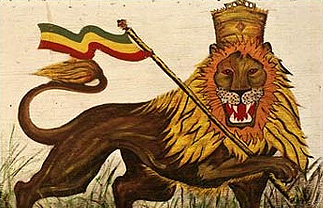 (The conquering Lion by Judah)

Category
#Reggae